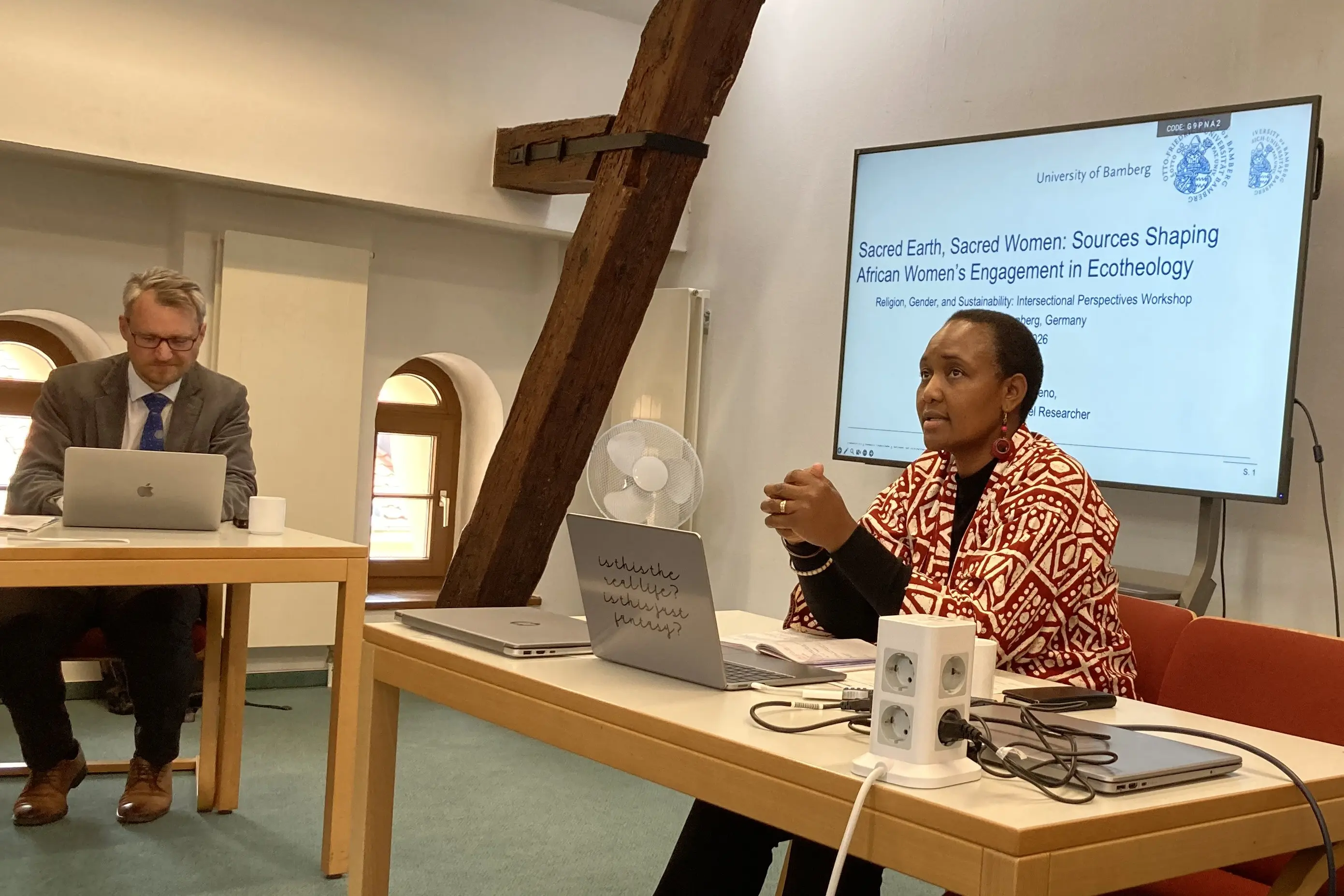
Loreen Maseno (rechts), Philipp Öhlmann (links)
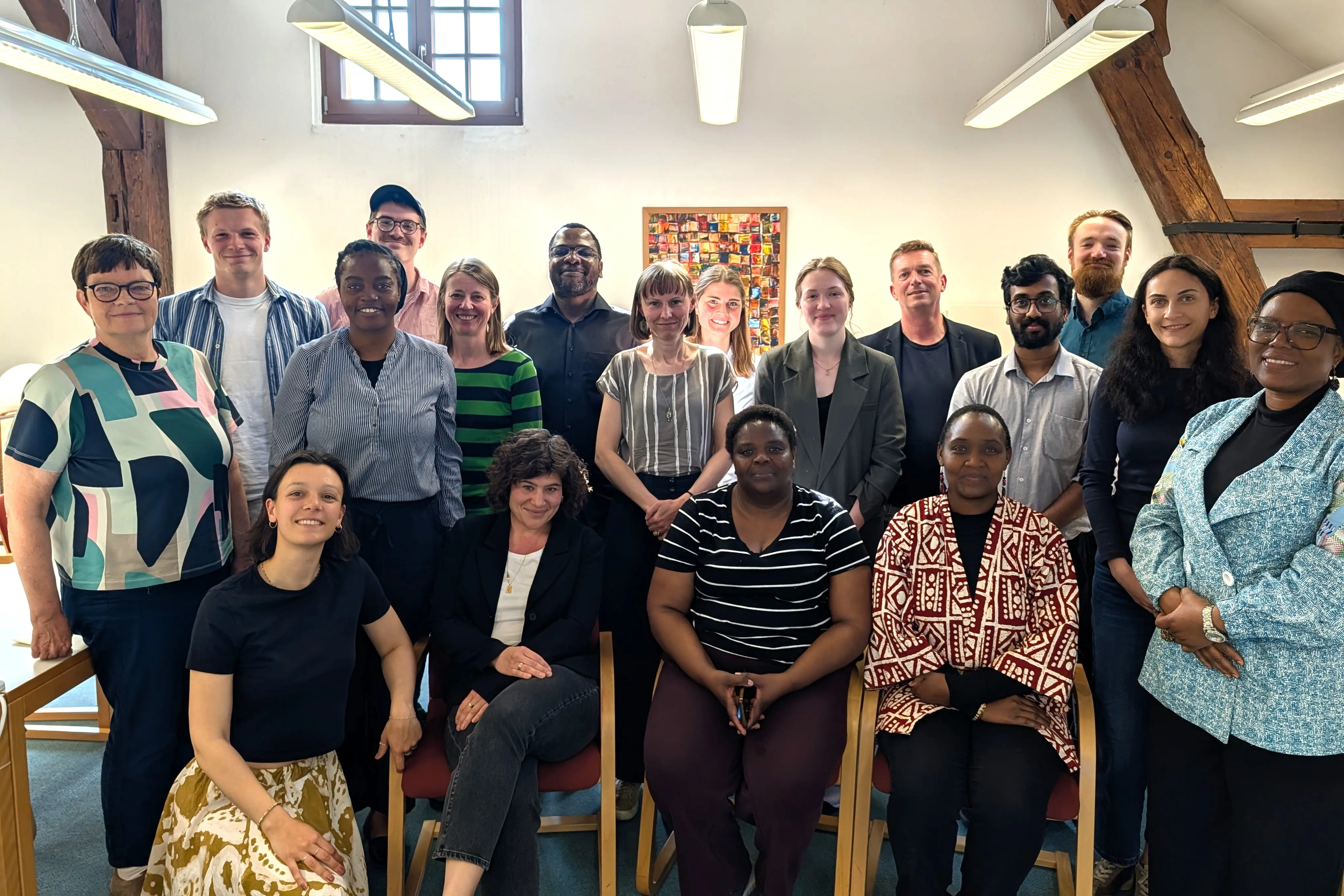
Loreen Maseno (1. Reihe, 1. von rechts), Molly Manyonganise (1. Reihe, 2. von rechts), Kathrin Gies (2. Reihe, 4. von links)
Internationaler Workshop „Religion, Gender and Sustainability” in Wittenberg
Am 22. Mai 2026 nahmen Prof. Dr. Loreen Maseno und Prof. Dr. Kathrin Gies an einem internationalen Workshop „Religion, Gender and Sustainability: Intersectional Perspectives“ teil, der von Dr. Philipp Öhlmann, Wittenberg Center for advanced studies organisiert wurde. Loreen Maeno identifizierte in ihrem Vortrag „Sacred Earth, Sacred Women: Sources Shaping African Women’s Engagement in Ecotheolgy” fünf unterschiedliche Kontexte, auf die eine afrikanisch-feministische Ökotheologie zurückgreift: die Bibel, Erfahrungen von Frauen, afrikanische Weisheitstraditionen und religiös-kulturelles Erbe und schließlich die christliche feministische Tradition des Westens. Zu den weiteren Referentinnen des Workshops gehörte auch Prof. Dr. Molly Manyonganise, Zimbabwe Open University/HU Berlin, die als Humboldt Stipendiatin von 2020–2023 an der Universität Bamberg geforscht hat.
English version
International Workshop “Religion, Gender and Sustainability: Intersectional Perspectives”
On May 22, 2026, Prof. Dr. Loreen Maseno and Prof. Dr. Kathrin Gies participated in the international workshop "Religion, Gender and Sustainability: Intersectional Perspectives," organized by Dr. Philipp Öhlmann of the Wittenberg Center for Advanced Studies. In her presentation titled "Sacred Earth, Sacred Women: Sources Shaping African Women’s Engagement in Ecotheology," Loreen Maseno identified five distinct contexts drawn upon by African feminist ecotheology: the Bible, women’s experiences, African traditions of wisdom, religious-cultural heritage, and finally, the Western Christian feminist tradition. Other speakers at the workshop were Prof. Dr. Molly Manyonganise (Zimbabwe Open University/HU Berlin), who conducted research at the University of Bamberg from 2020 to 2023 as a Humboldt Fellow.