GRADUATION INTERVIEW ▼
Implementing Sustainability in Vocational Education and Training
AN INTERVIEW WITH JULIA HUFNAGL
:::::::::::::::::::::::::::::::::::::::::::::::::::::::::::::::::::::::::::::::::::::::::::::::::::::
SHORT PROFILE
Name: Julia Hufnagl
Field: Business Education
Dissertation: Sustainability in Vocational Education and Training
:::::::::::::::::::::::::::::::::::::::::::::::::::::::::::::::::::::::::::::::::::::::::::::::::::::
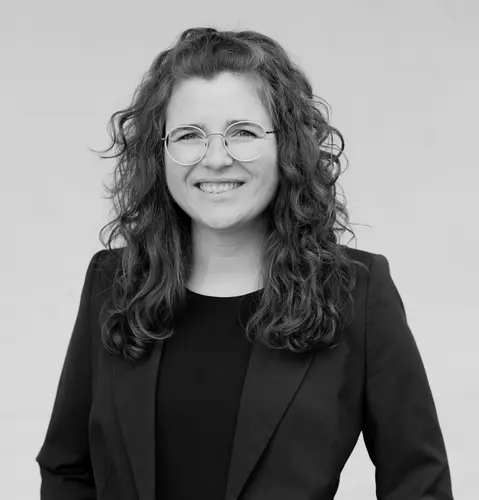
Our doctoral member Julia Hufnagl has successfully completed her dissertation. In her Graduation Interview, she gives insights into the topic and findings of her dissertation, talks about her time at the BAGSS, and shares the next step in her career.
// What drew you to your dissertation topic and what interests you most about it?
J.H. When I started my PhD, sustainability was the buzzword—this was just before AI stole the spotlight. Everyone agreed it was important, and there were plenty of inspiring flagship projects. But I kept wondering: what about the bigger picture? How do we move from isolated success stories to making sustainability a natural part of the entire vocational education and training (VET) system?
I was especially interested in workplace learning. Unlike schools, companies have their own priorities, goals, and business logics. That raises some fascinating questions: How do these logics influence what is actually taught? What does “sustainability” even mean in a corporate training context? And why does implementation often fall short of political ambitions?
There was already evidence suggesting that sustainability wasn't being implemented as comprehensively as intended—but very little empirical research explaining why. That knowledge gap, combined with the topic's real-world relevance, made it an exciting challenge to explore.
// Can you give us a small sneak peek about the findings of your thesis?
J.H. In short: sustainability in VET is shaped much more by companies' priorities than by policy documents or official guidelines.
One of the key findings is a kind of “say-do gap”: while sustainability is often prominently featured in strategies and mission statements, it is much less embedded in everyday training practice. Many leaders in corporate education see sustainability primarily as a matter of individual responsibility rather than something that requires structural change within the organization. Unsurprisingly, that makes a holistic implementation rather difficult.
// If you could go back and give yourself one piece of advice at the start of your PhD, what would it be?
J.H. You don't have to become the world's leading expert on every aspect of your topic.
Choose your focus, justify it, and don't be afraid to leave interesting side paths unexplored. A PhD is about making a contribution—not writing the last word on a subject. Also, remember: it's your dissertation, and in the end, you're the one defending it.
And for anyone writing a cumulative dissertation: trust me, three or four strong papers are enough. Your future self, trying to write the synopsis, will thank you.
// What is the next step in your career?
J.H. I'll be continuing as a PostDoc, leading a research group funded by the German Federal Ministry of Labour and Social Affairs.
Our project explores how future vocational school teachers can be empowered as change agents to strengthen apprentices' health-related decision-making skills and support healthy, sustainable career pathways. The project combines research on apprentices' mental health with the development and evaluation of evidence-based teaching and learning approaches that can be integrated into teacher education and vocational schools.
As principal investigator, I'll be responsible for the scientific leadership of the project—from shaping the theoretical and methodological framework to coordinating the research team, ensuring quality across all work packages, and overseeing the design, implementation, and evaluation of our empirical studies.
I'm looking forward to building something new with an excellent team, exploring a new research field, and proving that learning doesn't stop once you've earned the title of „Dr.“