
Digital Identification of Solitary Bees and Wasps in Nesting Boxes
With the aim of investigating the colonisation of nesting boxes together with school pupils, university students, teachers, and lecturers from all disciplines and types of school, and of establishing a Germany-wide monitoring network, the “Wild Bees and Wasps” species group is developed for the ID-Logics identification app and tested in a citizen science teaching and learning environment. It enables cavity-nesting solitary bees and wasps to be identified based on characteristic features of their nests. The combination of observable teaching and learning nesting aids, digital identification, and accompanying materials makes ecological relationships visible in a scientifically sound manner.
Why Are Solitary Bees and Wasps Important?
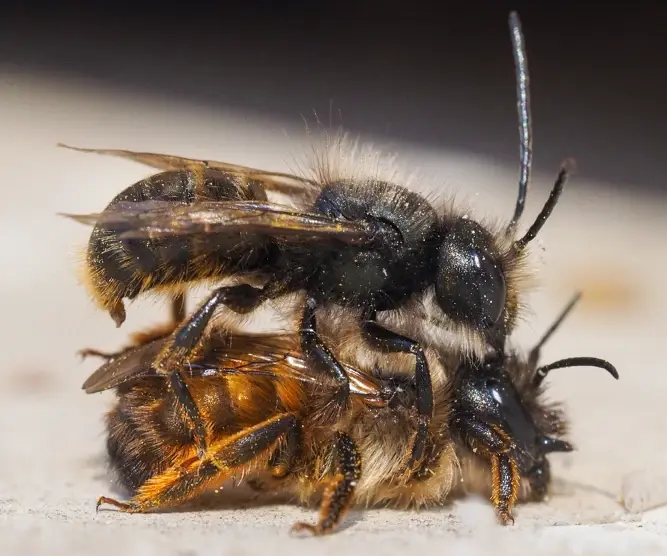
Due to their diversity and morphological adaptations, wild bees play a key role in the pollination of flowering plants. Unlike managed honey bees, wild bees such as bumblebees and mason bees also forage during periods of poor weather. Most wild bees are solitary, meaning that they do not form colonies or produce honey. However, approximately 50% of the roughly 561 wild bee species found in Germany are threatened (Rote Liste, 2011). Wasps are also important components of ecosystems, as they act as natural pest controllers by regulating populations of pest insects.
The decline of wild bees and wasps is closely linked to changes in land use, pesticide use, and the associated loss of food resources and nesting habitats.
Developing an Identification App for Participatory Teaching and Learning Environments
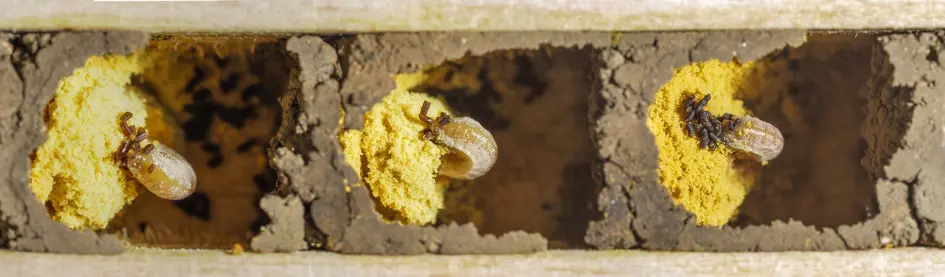
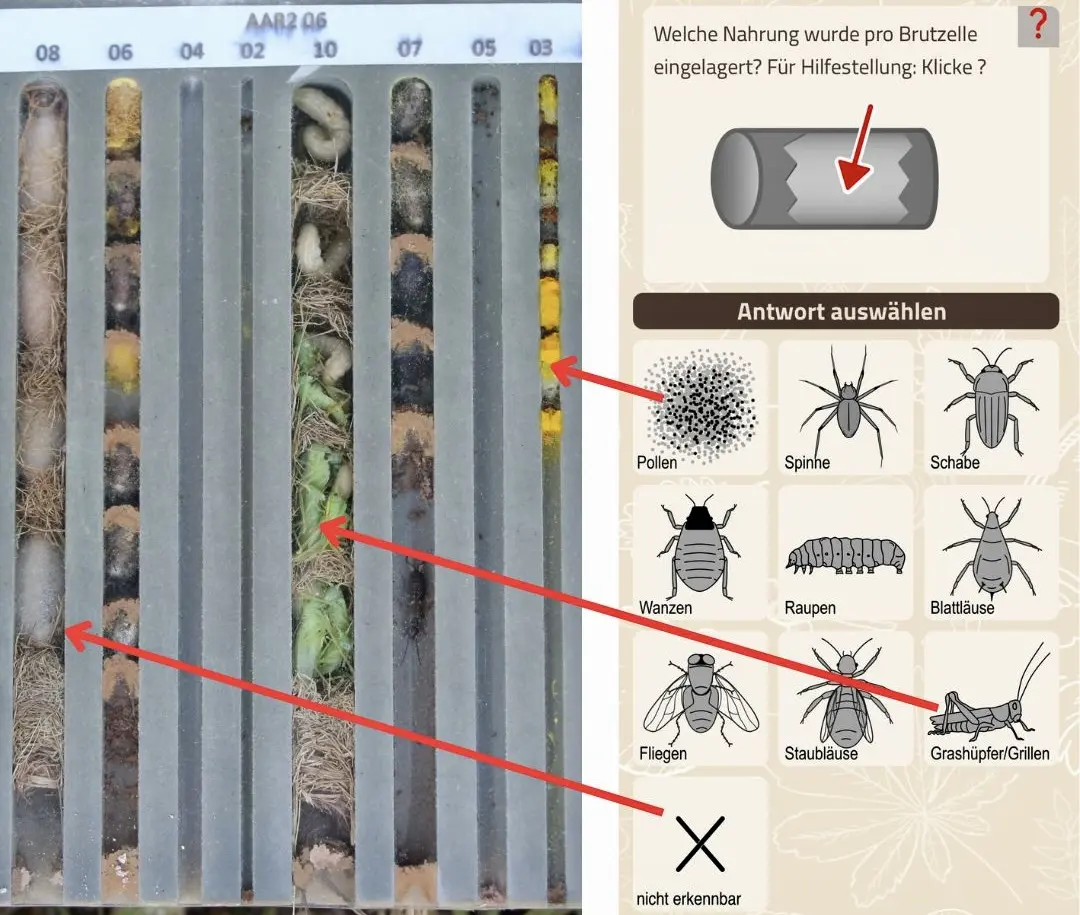
As wild bees and solitary wasps are difficult to identify from their morphology without advanced taxonomic knowledge, the digital identification tool focuses on characteristic features of their nests. These include, for example, the diameter of the nesting cavities, the stored food provisions, and the different materials used for nest closures and partitions. The specially developed “Wild Bees and Wasps” identification group in ID-Logics guides users step by step through the identification process using a sequence of questions supported by graphics and short tutorial videos. It enables them to identify 37 common species and genera of cavity-nesting solitary bees and wasps based on their nests in teaching and learning nesting aids.
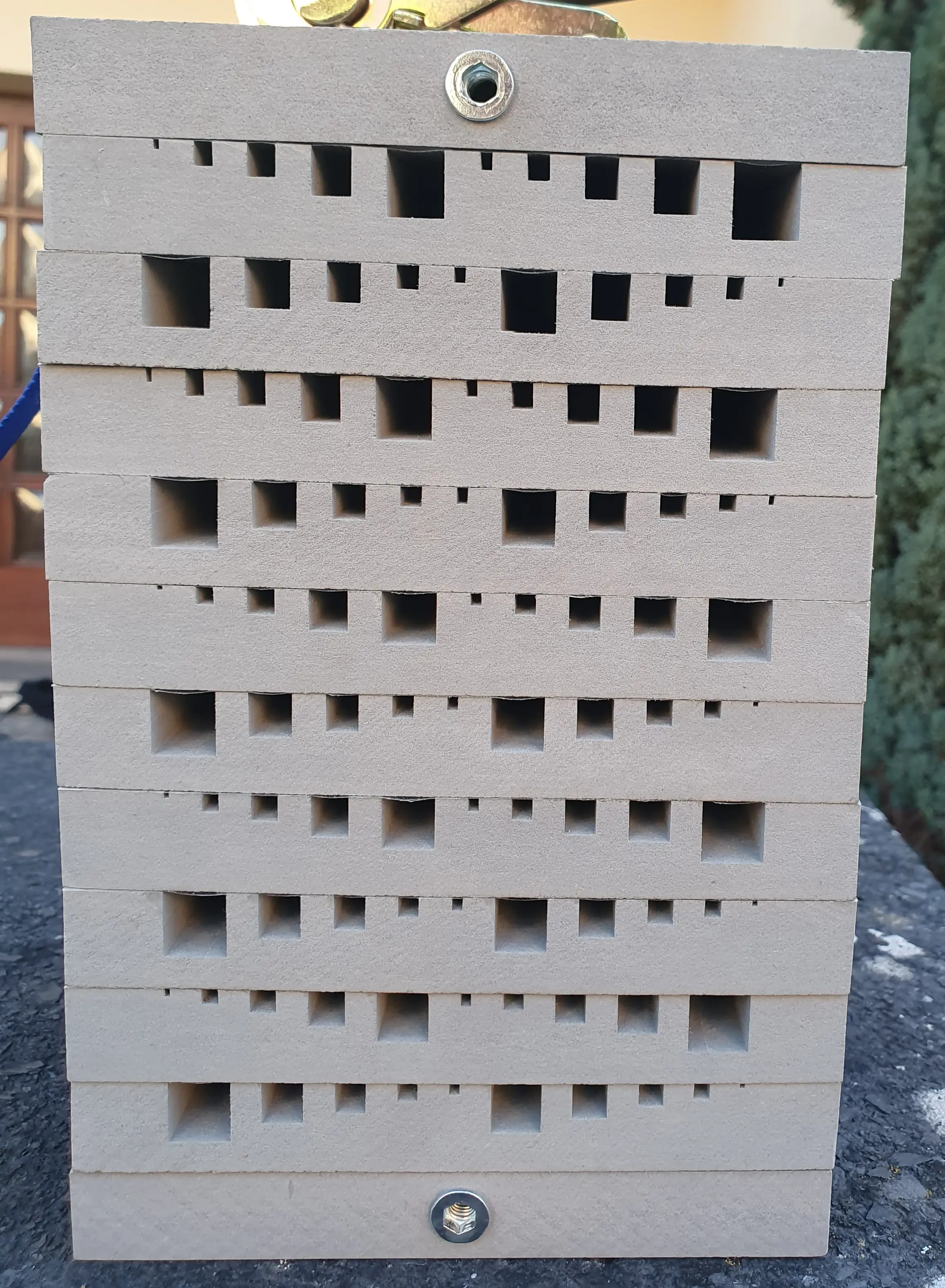
The observable teaching and learning nesting aids provide a non-invasive view inside the nests. In combination with digital identification, they create a teaching and learning environment in which participants explore ecological relationships and the life histories of cavity-nesting wild bees and solitary wasps. In this way, they facilitate first-hand experiences and inquiry-based learning.
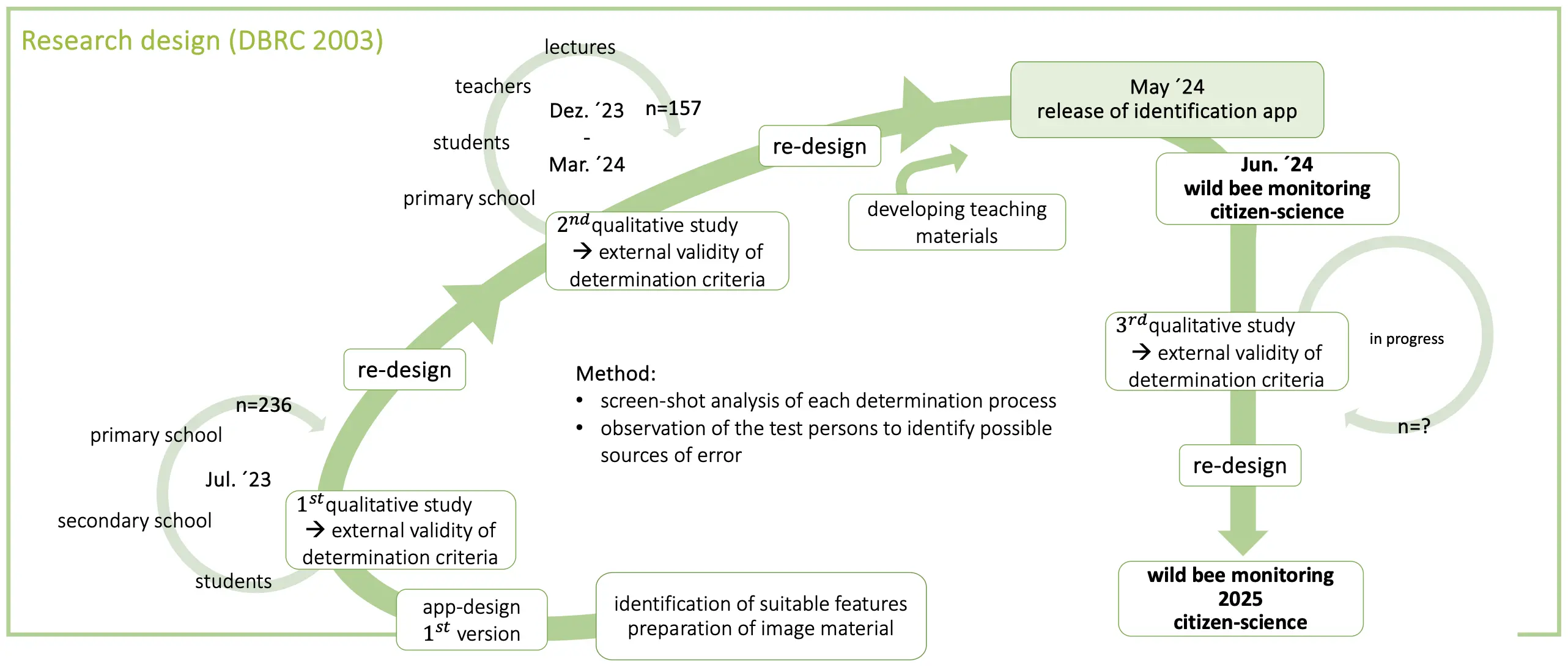
The identification group is implemented within the ID-Logics platform using a Design-Based Research approach (Reinmann, 2005) (Larsen et al., 2025) and revised based on the evaluation results from two testing points. This substantially increases the proportion of correct identifications (Larsen et al., 2024).
Citizen Science Pilot: Exploring Wild Bees at Schools and Universities
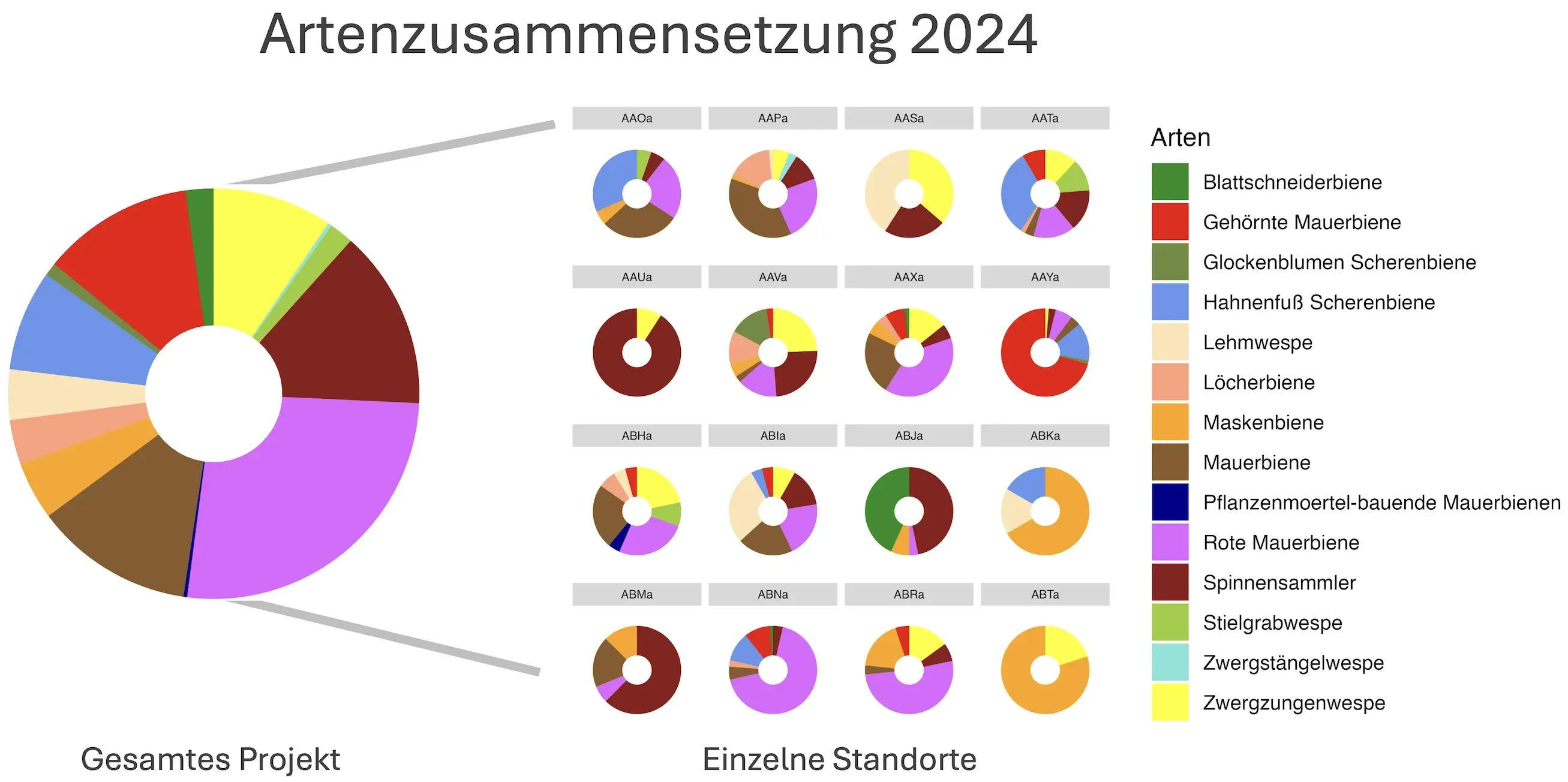
At the heart of our participatory teaching and learning environment is the involvement of university students and school pupils in research processes through digital media. Together, they investigate the colonisation of nesting boxes as part of a Germany-wide research network of schools and universities. Using the ID-Logics identification app, participants collect data on the colonisation of the nesting boxes and investigate their own research questions as well as questions that compare multiple locations.
Throughout the project, prospective and practising teachers and university lecturers are trained to act as multipliers, enabling them to implement the citizen science pilot project sustainably in schools and higher education institutions and conduct it with learners. They receive a complete resource package consisting of a teaching and learning nesting boxes, the identification app, professional development opportunities, teaching materials, and intensive scientific and educational support.
The aim is to establish a Germany-wide monitoring network in which the collected data provide a basis for long-term observations of the occurrence and distribution of solitary bees and wasps and for comparisons between the participating locations. These findings can be used to develop measures for making school and university grounds more supportive of biodiversity. An in-depth engagement with the diversity of cavity-nesting wild bees and solitary wasps can not only enhance species knowledge but also encourage long-term pro-environmental action in the context of Education for Sustainable Development.
The DiKuLe wild bee project was carried out primarily under the leadership of Dr Yelva Larsen, in collaboration with Dr Felix Fornoff from the University of Freiburg, and was funded by the Foundation Stiftung Innovation in der Hochschullehre.