Six Universities, One Exchange of Ideas: The xAILab Bamberg at the 5th Borderless IDEA Lab Symposium in London
Our Contributions at a Glance
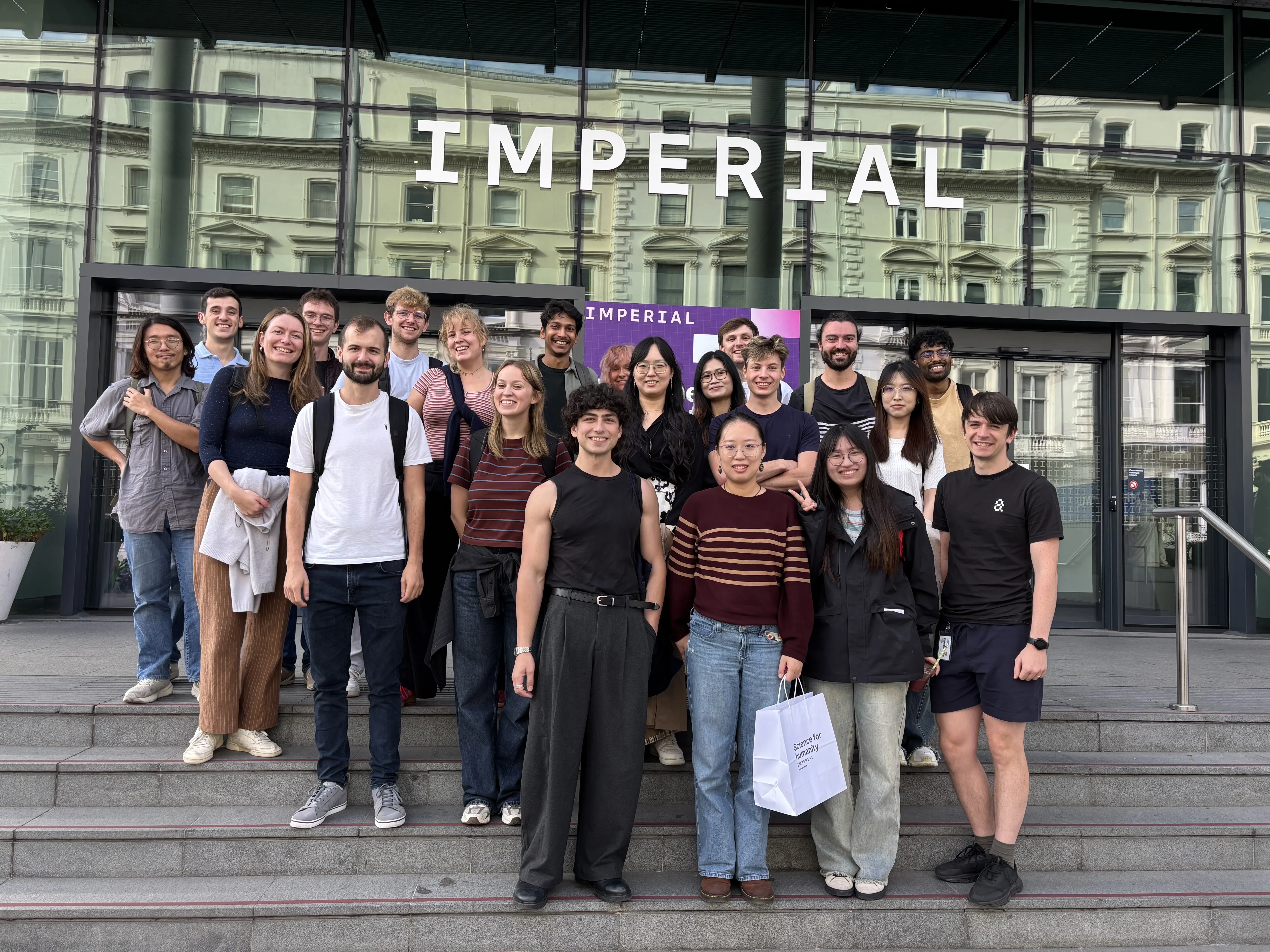
Our group was represented in London by PhD candidates Marco Lents, Hanh Huyen My Nguyen, and Sebastian Doerrich, together with Professor Christian Ledig. Professor Bernhard Kainz leads the IDEA Lab at FAU Erlangen-Nürnberg and is one of the academics who jointly lead the BioMedIA group at Imperial College London. The symposium brings both groups together every year. Further guests were two PhD candidates from the Medical AI Lab of Professor Qingjie Meng at the University of Birmingham, Professor Jeremy Tan from Aalborg University, and Johanna P. Müller, postdoctoral research associate at King's College London. Last year, the 4th edition took place in Erlangen, and we reported on it here.
Over two days, the program combined talks from new PhD candidates, keynotes, and a series of talks in which the participants presented recent work, wrapped up their PhDs, or shared new ideas for the coming year. Professor Bernhard Kainz opened the symposium on Monday, October 5th, and a joint dinner concluded the first day. On Tuesday, October 6th, our three talks were on the program. A keynote by Johanna P. Müller and the closing remarks ended the scientific part, and after lunch a campus tour of Imperial College London rounded off the symposium.
AI Feedback on Handwriting Legibility in Schools
Marco Lents introduced himself and his research to the group. After studying physics from 2019 to 2024 and working as a software developer from June to November 2025, he started as a PhD candidate in November 2025. His work asks how artificial intelligence can give pupils feedback on the legibility of their handwriting. Legibility is the innermost layer of handwriting quality, and it is linked to cognitive processes, can indicate developmental challenges, and forms a foundation for acquiring other skills. The envisioned pipeline starts with a pen equipped with motion and force sensors, reconstructs the pen trajectory from the sensor data, evaluates legibility, and generates feedback.
For the evaluation step, Marco Lents reported that the embeddings of the Pixtral vision transformer encode concepts such as legibility, cursive writing, stroke thickness, and semantics in a linear fashion, and that a linear probe on these embeddings reaches human-level performance. His current research targets the reconstruction of trajectories, the robustness of the evaluation, and the extraction of feedback.
Three Lessons from a First MICCAI
Hanh Huyen My Nguyen shared the three biggest takeaways from her first conference attendance, MICCAI 2026 in Strasbourg, where she also competed in the RARE challenge and reached 2nd place in the open development phase and 6th place in the closed testing phase. Her first lesson: research taste develops during existential crises at the conference. The second: a good paper and a good talk are two different products. The third: the question is sometimes more interesting than the answer. She closed with a compact message for early-career researchers: choose problems, communicate ideas, and develop taste. Her talk was very well received, and all other participants of the symposium confirmed her observations and could only agree with her insights.
Four Years of Robust Medical Image Classification
Sebastian Doerrich gave a recap of his research of the past four years under the title "Learning Robust Image Representations via Feature Disentanglement and Contextual Augmentation". His starting point is the gap between laboratory and clinic: classifiers for medical images are developed on curated data from a few sites, while the data they meet in daily practice comes from scanners, protocols, and patient populations they have never seen. Adoption in clinical practice remains slow, and the talk located the cause in reliability across populations and sites.
His approach to this problem can be categorized into a data part, a training part, an inference part, and an evaluation part, and his works of the past four years cover all four, with backbones that are either trained or kept frozen. The talk presented this work in four chapters. The first chapter covers learning representations that stay invariant to the acquisition: every image is a combination of anatomy and acquisition, so the two are separated in the latent space and the classifier relies on the anatomy alone, without labels, paired data, or knowledge of the target domain. The second chapter turns to data augmentation, since geometric transformations cannot imitate a staining protocol or a scanner, and stain normalization requires information about the target domain. The approach of this chapter therefore synthesizes the shift itself and trains the classifier on the resulting variation, as in our statistical color matching method Colorist, which received the Best Paper Award Runner-Up at DEMI at MICCAI 2026. The third chapter addresses the adaptation of frozen foundation models, for example with MoPET, and the fourth chapter is dedicated to honest evaluation, including the TRUE-Colon protocol for polyp detection in full colonoscopy procedures.
Where Medical Image Analysis Is Heading in 2027
Beyond our own talks, many contributions looked ahead. The talks of the other participants centered on large language models (LLMs), vision-language models (VLMs), and multimodal large language models (MLLMs): drafting reports from images, generating data, and building agentic systems with step-by-step reasoning. Recent surveys and preprints address the same topics. Surveys such as "A Survey of Deep Learning-based Radiology Report Generation Using Multimodal Data" review how multimodal deep learning models draft radiology reports to reduce the workload of physicians, and "Diffusion Models for Medical Image Analysis: A Comprehensive Survey" covers denoising diffusion models, a family of generative models, across applications, imaging modalities, and organs. The preprint "Agentic Systems in Radiology: Design, Applications, Evaluation, and Challenges" describes how LLMs with external tools and feedback loops can support multi-step radiology workflows, and it names error cascades, tool-use efficiency, and health IT integration as open challenges. With "MedVLM-R1", researchers trained a vision-language model with reinforcement learning to write out its reasoning in natural language so that its answers become more transparent.
For our own focus on robustness under distribution shift, these directions raise a concrete question: how do such models behave on data from scanners and hospitals they have never seen? We take this question back to Bamberg.
A Walk Across the Imperial Campus
The program ended with a campus tour of Imperial College London. A walk across the South Kensington campus can begin at the Huxley Building, home of the BioMedIA group and venue of the symposium, and lead to the Queen's Lawn in the middle of the campus, which is overlooked by the Queen's Tower. The tower is all that remains of the Imperial Institute, designed by T. E. Collcutt to mark Queen Victoria's Golden Jubilee of 1887 and opened in 1893. When the rest of the building was demolished from 1957 onward to make room for the expansion of Imperial College, the tower was kept. It stands 287 feet (about 87 meters) tall, holds a peal of ten bells, and was officially reopened in April 2026 after a three-year renovation. Imperial College itself was founded in 1907 from institutions that were already based in South Kensington.
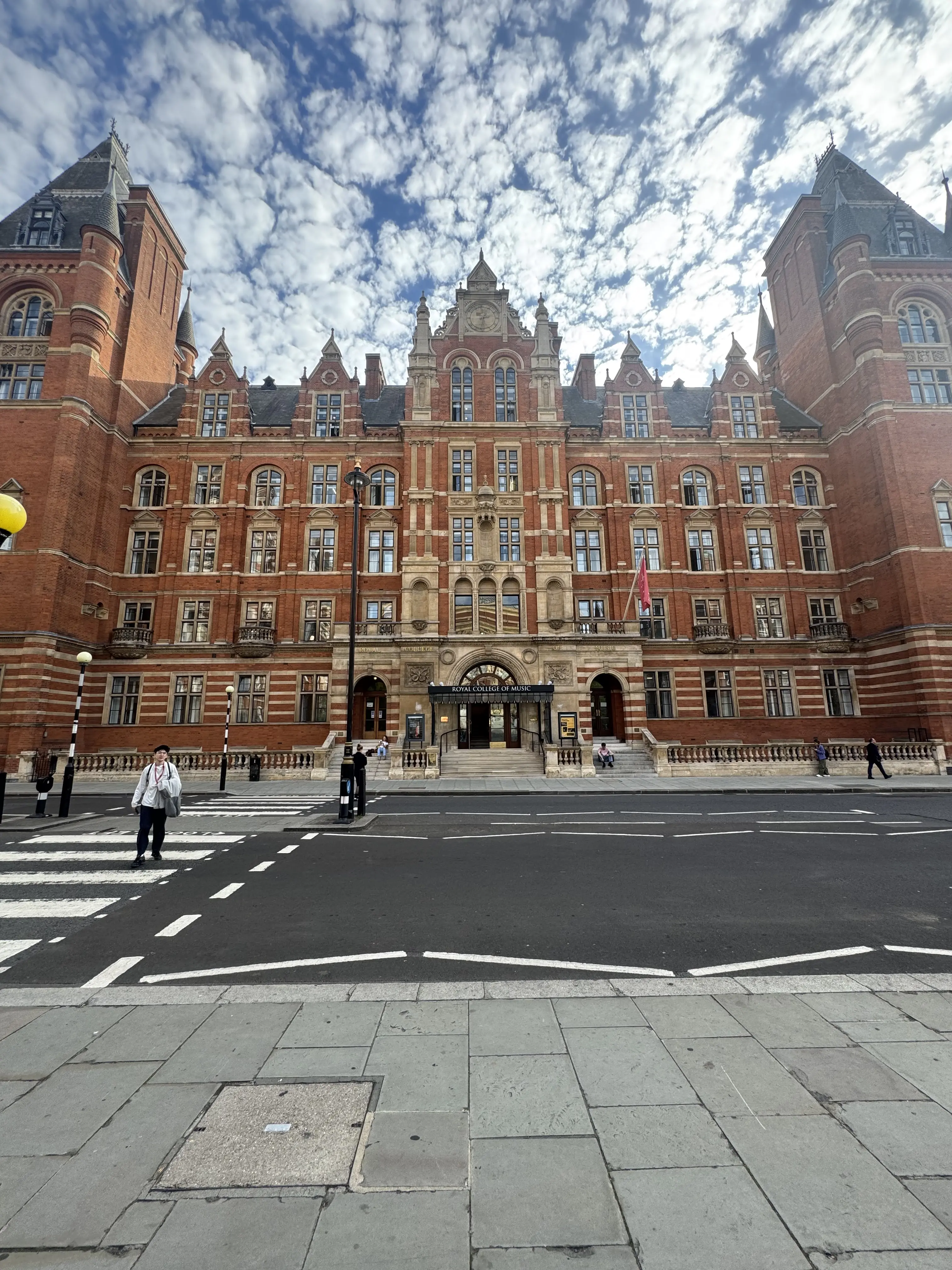
Right next to the campus, on Prince Consort Road, lies the Royal College of Music in a building that opened in 1894. Its Britten Theatre, opened in 1986, hosts opera, ballet, music, and theatre. Opposite stands the Royal Albert Hall, which opened in 1871 and hosts the BBC Proms every summer. All of this belongs to Albertopolis, the quarter around Exhibition Road on land bought with the profits of the Great Exhibition of 1851, which also houses the Natural History Museum, the Science Museum, and the Victoria and Albert Museum.
Collaboration Across Borders and the London Experience
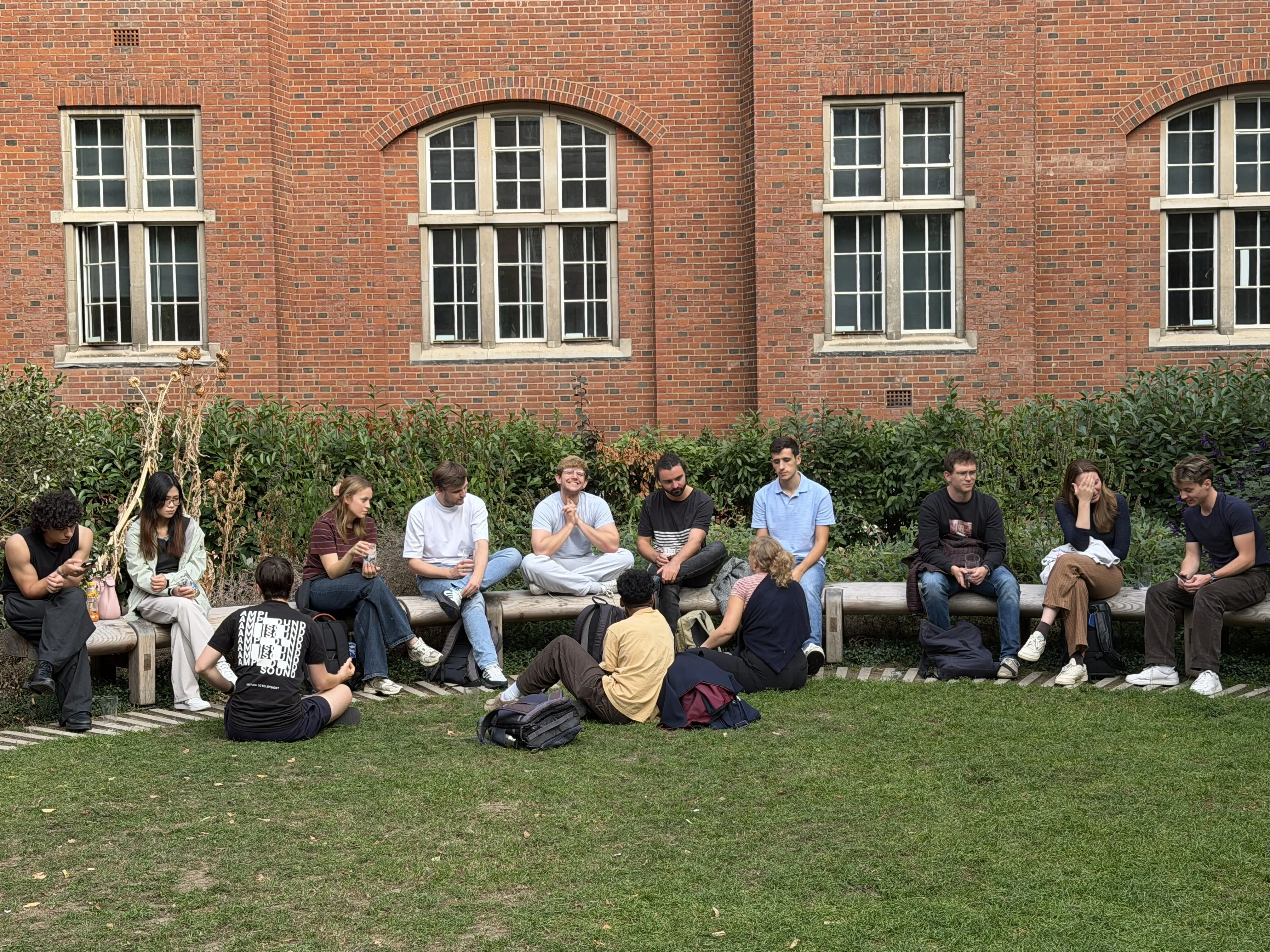
A symposium across three countries costs time and money, and it earns them back through the exchange it makes possible. The groups in London, Erlangen, Bamberg, Birmingham, Aalborg, and at King's College London work on related questions with different data, methods, and clinical partners. Each talk puts an idea up for discussion, and the conversations around the talks are where early ideas meet critique long before a paper is submitted. Alumni bring the perspective of their new groups, and PhD candidates who have just started meet the network in their first months of research.
London added its own part to the exchange. It is a city of great cultural variety and culinary range, large in almost every respect, with cozy pubs, generous parks, tidy streets, and pleasant buildings wherever one looks. Kensington Gardens, with the Albert Memorial, lies just across from the Royal Albert Hall, and a short walk leads from there back to the campus.
Looking Forward
We thank Professor Bernhard Kainz for organizing the symposium and for hosting us at Imperial College London, and all participants for the open and constructive discussions. We return from London with new ideas for our research and look forward to the next edition.