Forests play a crucial role in tackling climate change and achieving the global Sustainable Development Goals. They store a large share of the carbon found on land, with much of this carbon held in soils as soil organic matter. But how does carbon move from trees into the soil, and what determines whether it remains there for decades or even centuries?
Plants take up carbon dioxide from the atmosphere through photosynthesis and use this carbon to grow. A substantial proportion of the carbon fixed by plants is transferred belowground through their roots. This process, known as rhizodeposition, includes the release of carbon compounds from living roots as well as carbon derived from roots as they die and decompose. My previous research has shown that carbon entering the soil through rhizodeposition can be more efficiently transformed into stable and persistent soil organic matter than carbon entering the soil through aboveground leaf litter. Roots therefore represent an important, yet still insufficiently understood, pathway for long-term carbon storage in forest soils.
Climate change is altering the environmental conditions under which forests grow. Increasing temperatures and more frequent and severe droughts may change how trees allocate carbon between aboveground and belowground processes – and, consequently, how much carbon ultimately enters and remains stored in the soil. Yet we still know relatively little about the mechanisms underlying these responses.
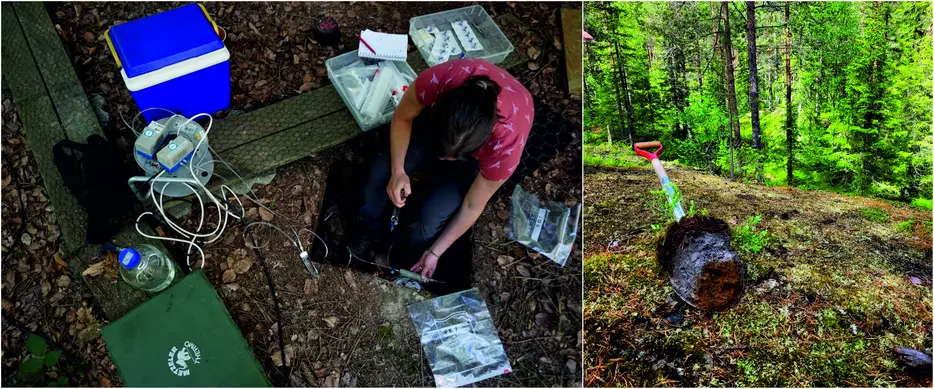
This project investigates how trees allocate carbon to their roots and how this carbon is transformed and stabilized in forest soils under changing climatic conditions. A particular focus is placed on the effects of soil moisture, air humidity and warming, both individually and in combination.
To disentangle these complex interactions, the research will be conducted under controlled conditions in an innovative model ecosystem. This approach allows us to identify causal relationships between climate conditions, plant carbon allocation and soil carbon storage. The findings will then provide a basis for understanding how these processes operate in natural forest ecosystems and how they may contribute to the resilience of forests under future climate change.
Large-scale forest restoration is increasingly recognized as an effective nature-based solution for climate change mitigation, particularly in tropical and subtropical regions. In this context, mixed-species forests are considered especially promising because they provide greater ecological stability and support a wider range of ecosystem services than monoculture plantations.
Despite growing interest in biodiversity–ecosystem functioning relationships, experimental evidence on the long-term role of rhizodeposition in maintaining ecosystem services in planted tree communities remains limited. This knowledge gap constrains our understanding of the mechanisms through which tree diversity enhances key ecosystem functions, including carbon sequestration and nutrient cycling.
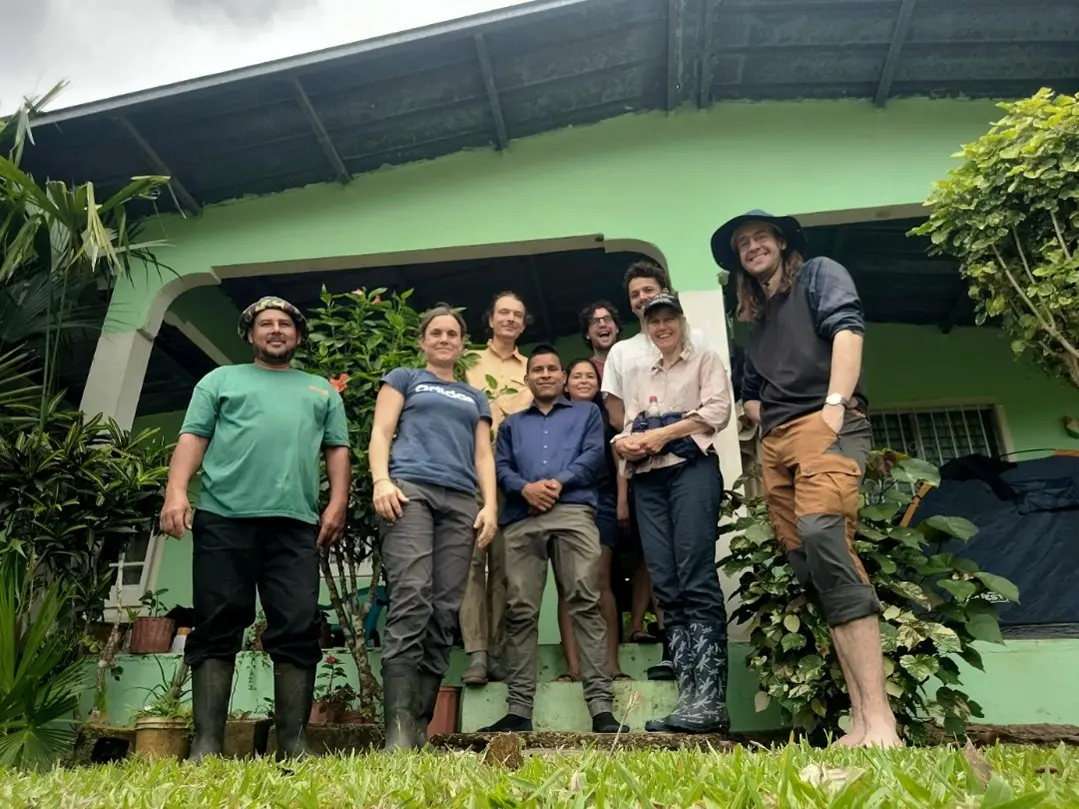
Since 2008, Prof. M. Brunn has been involved in the oldest tropical tree diversity experiment of the International Network of Tree Diversity Experiments (TreeDivNet), located in Sardinilla, Panama. The experiment has been monitored extensively, with annual tree inventories conducted between 2001 and 2017. The most recent comprehensive field campaign took place in 2017 (Schnabel et al., 2025).
As part of the project “S-LtBEF: Sardinilla – Understanding Long-term Biodiversity-Ecosystem Functioning Relationships in the World’s Oldest Tropical Tree Diversity Experiment”, and with additional support from the REaCh – RPTU Center for Early Career Researchers, she participated in the 25th-anniversary field campaign. Master´s student Tilo Mexner (Osnabrück University) and me investigated how tree diversity influences ecosystem functions and services in regenerating tropical forests over timescales relevant to tropical timber harvesting.
The data collected and the site preparations carried out during this campaign provide an important foundation for ongoing and future research. They are complemented by a range of collaborative projects conducted by international researchers and working groups, contributing to a comprehensive understanding of long-term biodiversity effects in tropical forest ecosystems.
The transfer of organic matter and nutrients from terrestrial environments to aquatic ecosystems and its ecological consequences are well documented. In contrast, the reciprocal influence of aquatic systems on terrestrial ecosystems has received considerably less attention.
Within SystemLink (RTG2360), a DFG-funded Research Training Group at RPTU Kaiserslautern-Landau, we investigate how anthropogenic stressors affecting aquatic environments propagate across ecosystem boundaries and influence terrestrial food webs. Our research focuses on both bottom-up and top-down ecological interactions, providing insights into the mechanisms that link aquatic and terrestrial ecosystems and shape their responses to environmental change.
Girardi, J.P., Korz, S., Muñoz, K., Jamin, J., Schmitz, D., Rösch, V., Riess, K., Schützenmeister, K., Jungkunst, H.F., Brunn, M. (2022) Nitrification inhibition by polyphenols from invasive Fallopia japonica under copper stress. Journal of Plant Nutrition and Soil Science 185(6): 923-934.
Grange, S.K., Girardi, J.P., Mendoza-Lera, C., Dyckmans, J., Muñoz, K., Brunn, M., Jungkunst, H.F. (2025) Stable isotopes as a tool towards a better understanding of the biogeochemical traits of invasive Fallopia japonica: a pot experiment. Isotopes in Environmental and Health Studies. 1-15.
Manfrin, A., Schirmel, J., Mendoza-Lera, C., Ahmed, A., Bohde, R., Brunn, M., …, Schulz, R. (2023) SystemLink: moving beyond aquatic-terrestrial interactions to incorporate food web studies. Limnology and Oceanography Bulletin 32(2): 77-81.
Globally, soils store more carbon than vegetation and the atmosphere combined, making them a key component of the Earth's climate system. Soil carbon originates from both above-ground litter inputs and below-ground root-derived carbon. Increasing evidence suggests that root-derived carbon contributes disproportionately to long-term carbon stabilization, highlighting the importance of the rhizosphere – the dynamic interface between plants and soil – in regulating ecosystem carbon cycling.
Drought can substantially reduce carbon assimilation by trees, potentially weakening the carbon sink function of forest ecosystems. However, recent studies indicate that soil processes may respond differently to drought than above-ground vegetation, complicating predictions of carbon storage and stability under changing climatic conditions. Furthermore, many existing studies are limited by methodological constraints and often overlook short-term responses to intermittent drought events, particularly in ecosystems that are not adapted to water limitation.
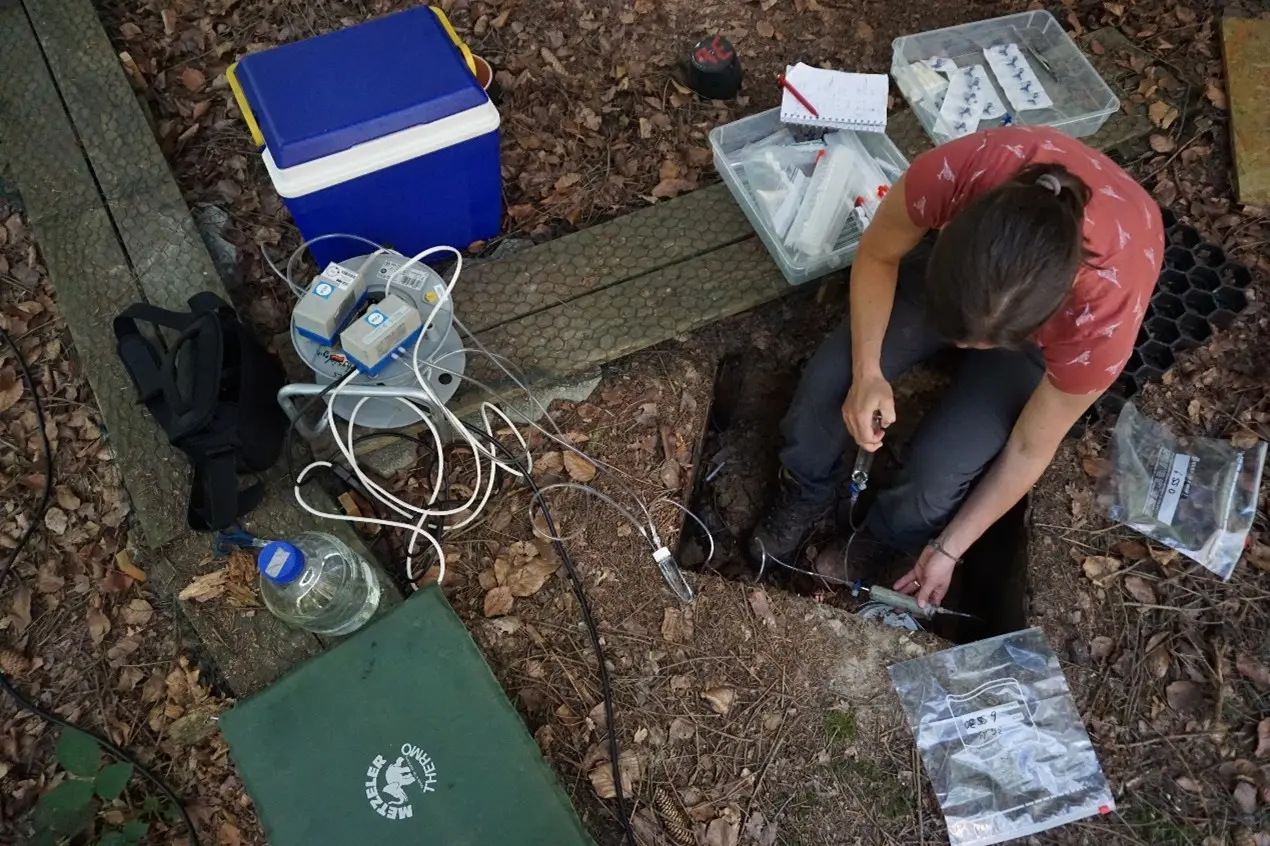
The*KROOF (Kranzberg Forest Roof Project) experiment provides a globally unique opportunity to investigate the effects of drought and subsequent rewetting on two of Europe's most important forest tree species, European beech (*Fagus sylvatica*) and Norway spruce (*Picea abies*). By combining innovative field sampling with state-of-the-art analytical approaches, we investigate how climate-induced changes in carbon allocation influence soil carbon dynamics and the long-term carbon sequestration potential of forest ecosystems.
Prof. M. Brunn contributed to the KROOF project between 2019 and 2023, focusing on carbon allocation processes in the rhizosphere and their implications for soil carbon stabilization under drought and rewetting conditions.
Brunn, M., Krüger, J, Lang, F. (2023) Experimental drought increased the belowground sink strength towards higher topsoil organic carbon stocks in a temperate mature forest. Geoderma 431: 116356. https://doi.org/10.1016/j.geoderma.2023.116356
Hikino, K., Danzberger, J., Riedel, V.P., Hesse, B.D., Hafner, B.D., Gebhardt, T., Rehschuh, R., Ruehr, N.K., Brunn, M., Bauerle, T.L., Landhäusser, S.M., Lehmann, M.M., Rötzer, T., Pretzsch, H., Buegger, F., Weikl, F., Pritsch, K., Grams, T.E.E. (2022) Dynamics of initial carbon allocation after drought release in mature Norway spruce - Increased belowground allocation of current photoassimilates covers only half of the carbon used for fine-root growth. Global Change Biology 28 (23): 6889-6905. https://doi.org/10.1111/gcb.16388
Brunn, M., Hafner, B.D., Zwetlsloot, M.J., Weikl, F., Pritsch, K., Hikino, K., Ruehr, N.K., Sayer, E.J., Bauerle, T.L. (2022) Carbon allocation to root exudates is maintained in mature temperate tree species under drought. New Phytologist 235 (3). https://doi.org/10.1111/nph.18157
Grams T.E.E, Hesse, B.D., Gebhardt, T., Weikl, F., Rötzer, T., Kovacs, B., Hikino, K., Hafner, B.D., Brunn, M., Bauerle, T., Häberl, K.-H., Pretzsch, H., Pritsch, K. (2021) The Kroof experiment – realization and efficacy of a recurrent drought experiment plus recovery in a beech/spruce forest. Ecosphere 12 (3), 20. https://doi.org/10.1002/ecs2.3399
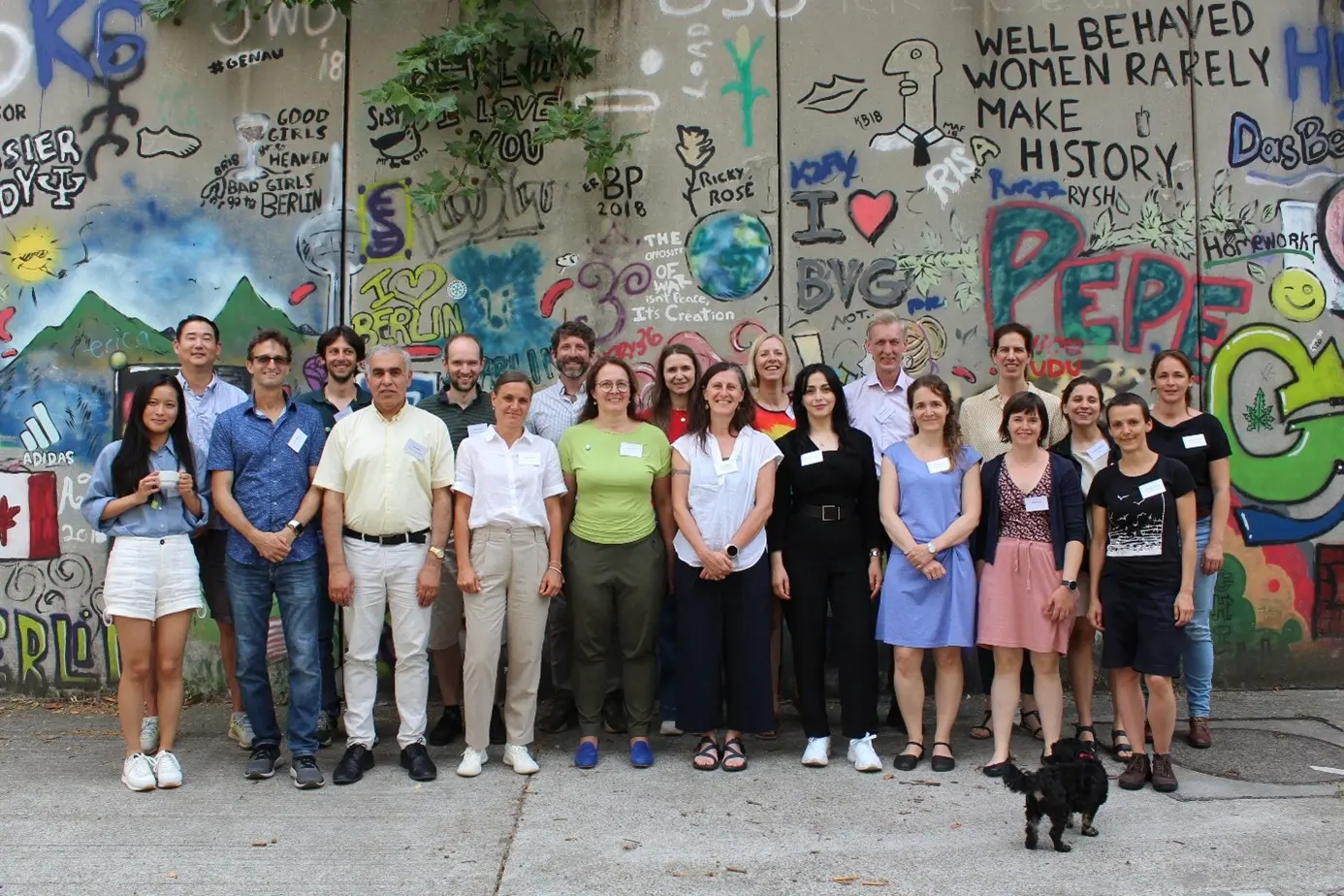
Root exudates - soluble substances released by plant roots to soil –play a central role in ecosystems. However, there have been few efforts to synthesize exudate research and to discuss critical knowledge gaps. As part of an international consortium of leading exudation ecologists we are developing sampling and analysis issues/advances, to enhance understanding of how exudates affect plant nutrition, soil microbial communities/activity and ecosystem functioning, and to identify future research priorities.