Recap on our Contributions at this Year's ISBI Conference in London
Spotlight on Our Contribution: Stylizing ViT
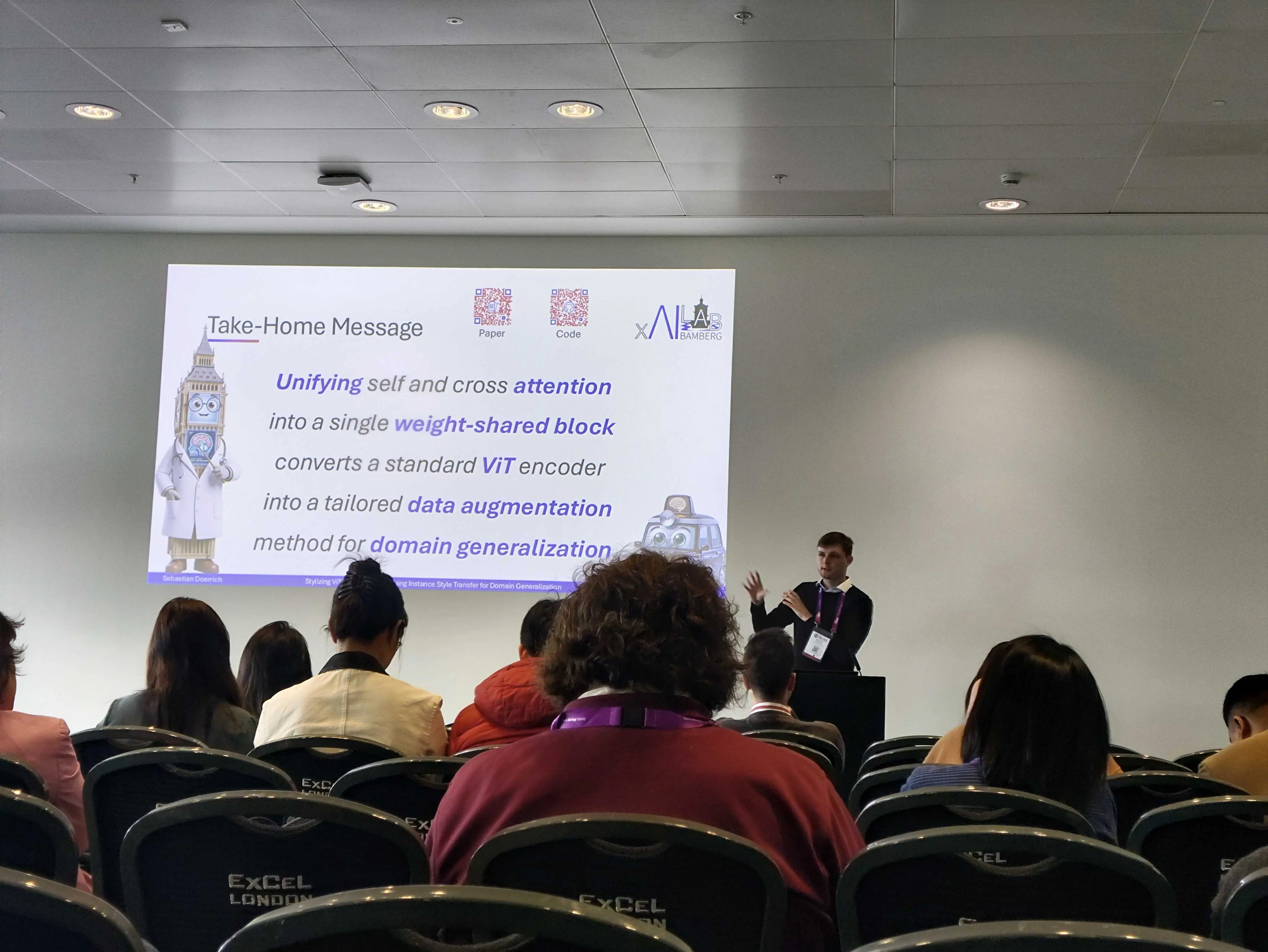
Our PhD candidate Sebastian Doerrich delivered an oral presentation on our latest research. He presented the paper titled "Stylizing ViT Anatomy Preserving Instance Style Transfer for Domain Generalization", coauthored with Francesco Di Salvo, Jonas Alle, and Professor Christian Ledig. The work addresses a major challenge in medical image analysis. Deep learning models frequently struggle with data heterogeneity and scarcity across clinical domains. This can cause downstream models to learn spurious stylistic relations rather than the true underlying anatomy, leading to substantial performance drops when faced with new domains. To solve this, the team introduced a modality agnostic Vision Transformer featuring a single encoder. By utilizing weight sharing within a unified attention block, Stylizing ViT integrates self-attention and cross-attention. This mechanism allows the model to maintain strict anatomical consistency while simultaneously performing diverse style transfers. By augmenting the training set on the fly with stylistically diverse but anatomically faithful images, the downstream model is forced to learn representations that capture true structural details. The method achieves up to a 13 percent accuracy improvement over current leading approaches, generating perceptually convincing images free of artifacts. Furthermore, extending beyond standard training augmentation, this method adapts unseen data samples to the training domain on the fly during inference, yielding a 17 percent performance improvement.
You can explore the full paper here.
Shaping Careers in the Age of AI
Beyond technical contributions, our group was involved in discussions about the professional landscape of our field. Professor Christian Ledig served as a panelist for "Shaping Careers in the Age of AI Voices, Paths, and Perspectives". As large language models and advanced tools continue to alter research and innovation, this panel provided a platform to reflect on how these technologies influence biomedical imaging, machine learning, and clinical applications. Professor Ledig joined a group of experts from diverse backgrounds and career paths. This included Chen Chen from the University of Sheffield, Shikha Dubey from Johnson and Johnson Innovative Medicine, J. Eugenio Iglesias from Harvard Medical School, Diana Mateus from Ecole Centrale Nantes, Sparkle Russell Puleri from Gilead Sciences, and Hongxu Yang from GE Healthcare. Together, they shared their professional journeys and discussed the opportunities and uncertainties of navigating a rapidly changing landscape.
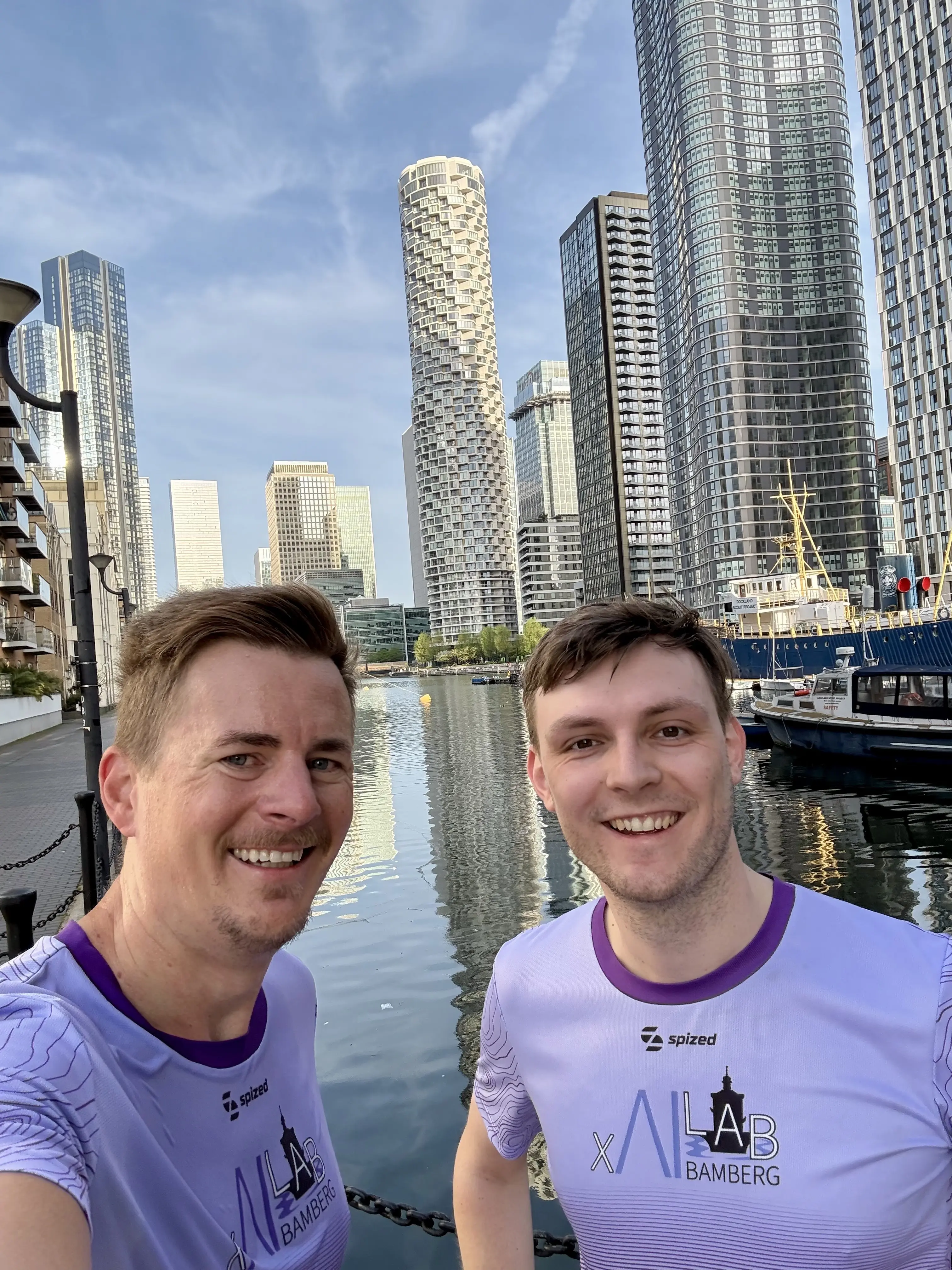
Science, Networking, and the London Experience
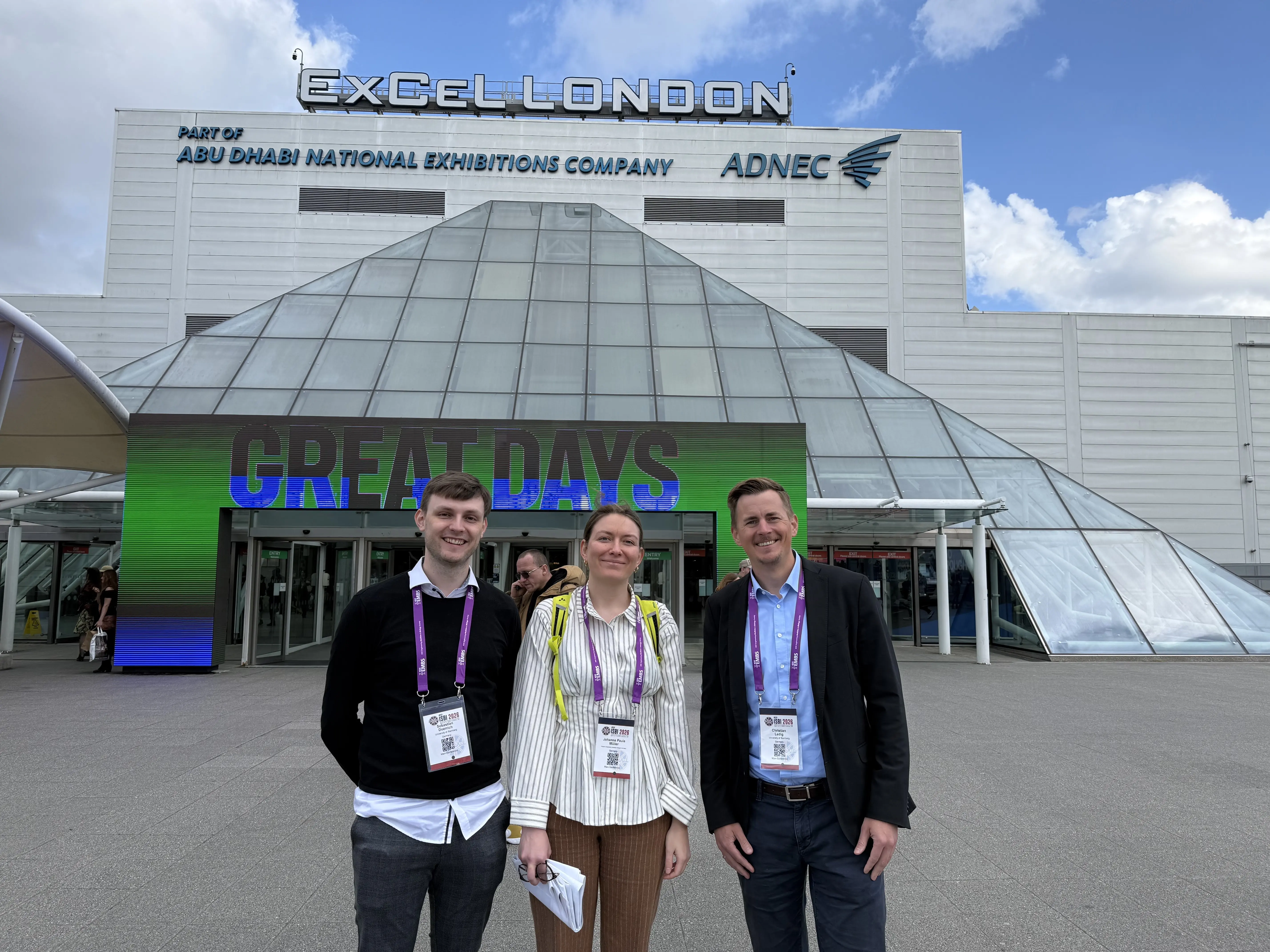
ISBI 2026 provided a strong setting for scientific exchange, combining London's historic heritage with an international outlook. The symposium highlighted the scale of the biomedical imaging community, with keynotes advocating for radically open science, robustness by design, and the transition toward modality conscious foundation models. These themes align directly with our focus on deployable clinical systems.
Our time in London reaffirmed our focus on advancing trustworthy and robust systems. From Sebastian’s approach to domain generalization to Professor Ledig’s perspectives on career development, we plan to continue supporting the growth of our research community. We return from ISBI 2026 with valuable feedback and look forward to addressing the next challenges in medical image analysis.