New Ideas in NCC Research

The search for Neural Correlates of Consciousness (NCCs) is a cornerstone of the Scientific Study of Consciousness. Despite significant progress, foundational questions in NCC research loom large. Experimental paradigms and measurement techniques have been challenged, while novel philosophical, conceptual, methodological, and technological innovations are reshaping the target of inquiry.
In light of these changes, this workshop aims to create a forum for leading experts to discuss and explore novel approaches in NCC research. It aims to spark a discussion of connections between theoretical and empirical advances, and to facilitate the systematic exploration of hitherto unconsidered options across theoretical and empirical paradigms in NCC research.
Next to presentations of new ideas, the workshop hosts co-working sessions for participants to proactively explore synergies and novel directions in small, cross-disciplinary groups. In addition, discussions and a lightning talk session will allow the group to engage with each other and the speakers.
This workshop is held in hybrid format. To participate in the workshop, please apply as explained below.
Date & Time
Date: April 27 – 28, 2026
Time: 9:00 – 18:00 CET
Location: BAMΞ, University of Bamberg & Online, Zoom
This workshop is part of BAMΞ's Measurement Theory Sprint.
Invited Speakers
We are very happy to welcome the following invited speakers.

David Chalmers
Prof. Dr.
NYU Center for Mind, Brain, and Consciousness, New York University
Neural and Computational Correlates of Consciousness

Liad Mudrik
Prof. Dr.
School of Psychological Sciences, Sagol School of Neuroscience, Tel Aviv University
Using Prediction Maps to Guide Theory Testing and the Search for the NCC

Athena Demertzi
Prof. Dr.
GIGA Neurosciences & Physiology of Cognition, University of Liège
Brain Dynamics as a Means to Quantify Spontaneous Thinking
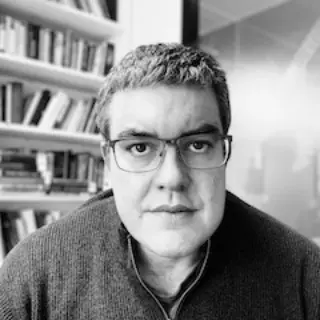
Colin Klein
Prof. Dr.
School of Philosophy, Australian National University
Holism and the Basis of Consciousness
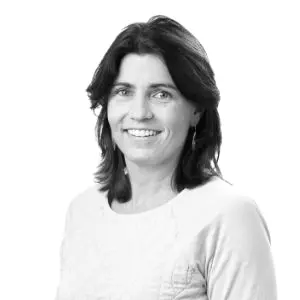
Olivia Carter
Prof. Dr.
School of Psychological Sciences, University of Melbourne
Using Meditation and Psychedelic Science to Examine Dimensions of Consciousness

Theresa Rieger
Institute of Medical Psychology and Systems Neuroscience, University of Münster
Perceiving the Absent: Illusion Paradigms in the Search for Neural Correlates of Consciousness

Insa Schloßmacher
Dr.
Predictive Processing on Different Hierarchical Dimensions Group, University of Münster
Disentangling Awareness and Task Relevance in the Search for Neural Correlates of Consciousness and Nonconscious Processing
Co-Working Sessions
Exchange between participants of the workshop is an integral part of this workshop. To facilitate this exchange, the workshop comprises co-working sessions, discussion sessions, and lightning talks by participants. For details, please see the schedule below.
Application
If you would like to participate in this workshop, please apply via the form linked below. Please note that in order to facilitate productive discussions, spaces are limited. We are looking forward to welcoming you!
Schedule
We are happy to share a preliminary workshop schedule below. Please note that there may still be minor changes to the schedule in advance of the workshop.
Instructions:
- Zoom access details have been sent to all workshop participants via email.
- Please click on the globe symbol 🌍 to convert a time into your own time zone.
- Use the calendar symbol 🗓️ or our Google calendar to add a talk to your personal calendar.
Monday, 27 April

9:00 – 9:45 CET 🌍
Brain Dynamics as a Means to Quantify Spontaneous Thinking
Athena Demertzi 🗓️(1.8 KB)
- Medical imaging indicates that, in typical conditions, brain function is dynamic and rich of variant patterns of activity, leading to an ongoing stream of thought. When this brain dynamism is compromised, people report changes in their thought content, too. Here, I will show how departures from balanced brain states are linked to altered conscious states as seen in the lab and clinical context. Inversely, I will introduce how atypical thinking, such as that of mind blanking, can provide a measurable expression of an underlying neurobiological mechanism linked to arousal fluctuations. Furthermore, I will argue that such contentless thoughts during wakefulness could reflect an adaptive biological response linked to the clearance of metabolic waste that is being accumulated during ongoing thinking. This perspective challenges the notion that the mind is a constant thought-full operator and leads to new knowledge about our current biomechanistic understanding of spontaneous thought during waking life.
10:00 – 10:45 CET 🌍
Using Meditation and Psychedelic Science to Examine Dimensions of Consciousness
Olivia Carter 🗓️(2.1 KB)
- In recent years there has been a resurgence of research and public interest in atypical or altered states of consciousness. These have focused both on conditions in which consciousness is impaired due to brain trauma or enhanced in some way through meditation or ingestion of psychedelics. This presentation focuses on the latter cases of apparent “enhanced states of consciousness” as an avenue to examine the relationship between different features of consciousness in altered states. The talk will begin with an overview of the impact of psychedelic drug use (psilocybin and LSD) on perceptual and cognitive function measured through lab-based experiments and subjective psychometric scales. It will then consider findings from a recent evidence synthesis that systematically reviewed expert texts within 3 traditions (Shamatha, Transcendental and Stillness Meditation) to identify 65 features reported or implied in one or more practice. These two lines of work will then be brought together to directly compare the psychedelic and meditation states. Findings will be discussed in relation to current debates about multi-dimensional vs uni-dimensional theories of consciousness and associated clinical and ethical implications.
14:00 – 14:45 CET 🌍
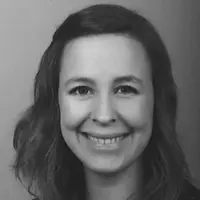
Disentangling Awareness and Task Relevance in the Search for Neural Correlates of Consciousness and Nonconscious Processing
Insa Schloßmacher 🗓️(2.6 KB)
- In recent years, several ERP components and different brain areas have been proposed as candidates for neural correlates of consciousness (NCC). On the temporal level, these include early negativities and late positivities, and on the spatial level, these include sensory cortices and fronto-parietal areas. However, in many experiments, awareness is confounded with reporting it, possibly overestimating the NCCs. In several studies, we used a no-report paradigm that circumvented this confound. Building on work by Pitts and colleagues, in one condition, we present participants with a demanding task that elicits inattentional unawareness of stimuli of interest that would otherwise be perceivable. In a second condition, we keep the physical stimulus presentation and the task constant, but inform participants about the presence of stimuli that were previously unperceived. Thus, the stimuli of interest remain task-irrelevant but are perceived by the participants. In a third condition, to investigate the influence of task relevance, participants perform a task involving the stimuli of interest. We applied this no-report paradigm in the visual, somatosensory, and auditory modality using electroencephalography (EEG) and functional magnetic resonance imaging (fMRI). In my talk, I will give an overview of the results we have obtained to date on the spatio-temporal characteristics of NCC and address the advantages and disadvantages of this paradigm. Furthermore, I will highlight the value of this paradigm for investigating nonconscious processing, focusing specifically on visual and auditory correlates of mismatch processing across different levels of awareness and relevance.
Tuesday, 28 April
9:00 – 9:45 CET 🌍
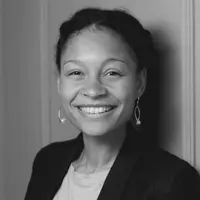
Perceiving the Absent: Illusion Paradigms in the Search for Neural Correlates of Consciousness
Theresa Rieger 🗓️(2.6 KB)
- Research on neural correlates of consciousness (NCC) has classically relied on contrasts between perceived and unperceived stimuli. In this framework the visual awareness negativity (VAN) has emerged as a prominent NCC candidate. However, if a neural signature truly reflects conscious perception, it should also be observable when perception occurs in the absence of corresponding sensory input, as in perceptual illusions. In this talk, I present findings from our event-related potential (ERP) study showing that illusory trials were associated with an enhanced posterior negativity within the VAN time window. This supports the interpretation of the VAN as a marker of conscious perception and highlights the value of illusion paradigms for NCC research, as they reduce stimulus-related confounds inherent in traditional hit-versus-miss approaches. At the same time, illusion-based NCC research raises distinctive methodological questions: How can the onset of an illusory percept be inferred when a corresponding stimulus is physically absent? How can paradigms be designed to elicit illusions robustly? Is there an additional challenge through high variability in illusion susceptibility across participants? And what role do pre-stimulus activity and oscillatory dynamics play in shaping illusory percepts? These questions are addressed alongside differences in sensory modalities and placed within Bayesian brain and predictive coding frameworks as broader models of conscious and illusory perception. Ultimately, the talk seeks to open room for discussion on how illusion-based paradigms can be situated within the study of consciousness in the pursuit of “New Ideas in NCC Research”.
10:00 – 10:45 CET 🌍
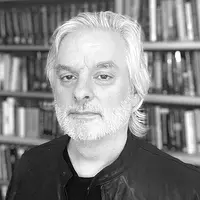
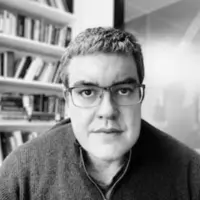
Holism and the Basis of Consciousness
Colin Klein 🗓️(2.2 KB)
- Phenomenal Holism is the thesis that an entire conscious experience is, in some sense, prior to the individual parts. This is a thesis that is asserted more often than it is made precise. A useful exception is the work of Geoffrey Lee, who argues that holism is the commitment to the claim that every part of an experience has the same total realiser. Lee suggests that this is too odd to be true.
I will present a straightforward model of how it could be true. The key is to realise that many representational bases are in fact holistic in Lee's sense: each basis vector corresponds to some property of each point in the represented domain. (This is one way to make sense of the otherwise baffling references to holograms by holists.) This also has a natural interpretation in terms of difference-makers for conscious experience: a holistic basis for a conscious domain is one where any simple intervention will have some effect on all aspects of conscious experience in that domain.
Of course, possible isn’t the same as true. I suggest that holism about sensory experience is still pretty implausible. My model suggests the sorts of things you’d have to look for, and it looks like those things are not very common. A more defensible target for holists might be valenced or affective experience. I focus in particular on the spherical harmonics as a basis for capturing this aspect of consciousness, and suggest some ways in which we might intervene to test this hypothesis.
15:30 – 16:15 CET 🌍
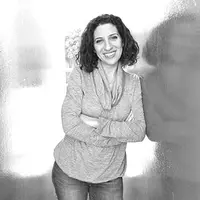
Using Prediction Maps to Guide Theory Testing and the Search for the NCC
Liad Mudrik 🗓️(2.0 KB)
- In recent years, the search for the neural correlates of consciousness (NCC) has been complemented, and influenced, by the ongoing efforts to test neuroscientific theories of consciousness. A key insight from these efforts, though, is that many theories remain underdeveloped and not fully specified, making it harder to establish stringent tests for their predictions. In this talk, I will present a novel methodological approach that represents scientific theories as networks of beliefs structured in a core-periphery manner. These Prediction Maps visualize theoretical claims and empirical predictions, and illustrate their inferential relations. This framework further facilitates systematic theory testing by allowing researchers to evaluate the evidential weight of different components of a theory, and to identify which experimental results would constitute the most informative tests. To do so, we apply graph-theoretic and network analysis metrics, quantifying the centrality of specific predictions. I argue that this approach can advance efforts to arbitrate between theories of consciousness and to identify their most promising candidate mechanisms as NCCs.
Organizers
Antje Peters
Sascha Benjamin Fink
Alex Lepauvre
Johannes Kleiner
Organizing Institutions
- Epilepsy Center Frankfurt Rhine-Main of the Department of Neurology, Center of Neurology and Neurosurgery, University Medicine Frankfurt
- Center for Behavioral Brain Sciences, Otto von Guericke University Magdeburg
- Centre for Philosophy and AI Research {PAIR}, Friedrich-Alexander-Universität Erlangen-Nürnberg
- Centre for the Study of Perceptual Experiences, University of Glasgow
- Bamberg Mathematical Consciousness Science Initiative (BAMΞ)
Contact
In case of questions, please reach out.
Updates
Updates about this workshop and similar activities are available via:
- Our mailing list, register here.
- Our Google calendar, available here.