C-Tests Workshop
Recent advances in artificial intelligence, animal sentience, and brain organoid research have brought the question of how to detect consciousness to the forefront. Determining whether animals, machines, or other systems are conscious has major scientific and practical implications, influencing ethical decision-making and policy. One promising approach to this challenge is the development of consciousness tests (C-tests), empirically grounded methods for detecting consciousness across diverse populations. Importantly, C-tests are not necessarily grounded in theories of consciousness, which are still “works in progress” and therefore not sufficiently robust to support secure ascriptions of consciousness. C-tests, instead, offer a data-driven methodology for navigating the uncertainty surrounding consciousness attributions and thus promise to be useful and effective even in the context of vast theoretical disagreement in consciousness science.
But how do C-tests work? How are they validated? Can they be successfully applied to heterogeneous populations? The goal of this workshop is to survey and critically assess the current state of the art regarding C-tests. While a growing number of proposals have been developed—drawing on behavioral, cognitive, and neurophysiological indicators—there has been relatively little systematic discussion of how these tests relate to one another or what standards they should satisfy. The workshop will therefore bring together researchers from multiple disciplines to examine existing approaches, discuss desiderata for robust C-tests, explore novel research programs, and investigate possible synergies between different methods. At the same time, we aim to foster critical discussion of key challenges, including conceptual ambiguities related to construct validity, risks of anthropocentric bias, and difficulties in validating C-tests independently of theories of consciousness.
The workshop will cover a broad range of topics reflecting the interdisciplinary nature of C-test research. Contributions will address conceptual, methodological, empirical, and practical issues. Discussions will focus on different target systems, including non-human animals, artificial intelligence systems, and brain organoids. By bringing together perspectives from philosophy, neuroscience, psychology, and AI, the workshop aims to clarify the emerging landscape of C-tests and stimulate new directions for research.
Date & Time
Date: June 8 – 10, 2026
Time: 10:00 – 21:30 CET
Location: BAMΞ, University of Bamberg & Online, Zoom
This workshop is part of BAMΞ's AI Consciousness Sprint.
Invited Speakers
We are currently in the process of inviting speakers. Please find below a list of confirmed invited speakers.

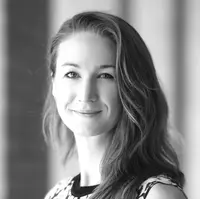
Jonathan Birch
Prof. Dr.
Department of Philosophy, Logic and Scientific Method, London School of Economics and Political Science
To Understand Consciousness, Study Insects

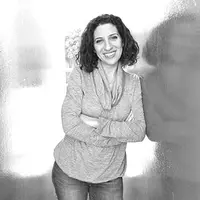
Liad Mudrik
Prof. Dr.
School of Psychological Sciences, Sagol School of Neuroscience, Tel Aviv University
Who and What is Conscious? A Method for Developing and Validating Tests for Consciousness

Susan Schneider
Prof. Dr.
Founding Director, Center for the Future of AI, Mind and Society, Florida Atlantic University
Toward a Naturalistic Science of Artificial Minds

David Chalmers
Prof. Dr.
Director of the NYU Center for Mind, Brain, and Consciousness, New York University
Tests for Consciousness in AI Systems

Claudia Passos
Prof. Dr.
Bioethics, New York University
Tests for Consciousness in Infants

Henry Shevlin
Prof. Dr.
Associate Director, Leverhulme Centre for the Future of Intelligence, University of Cambridge
Behaviourism's Revenge: Anthropomimesis and the Future of Consciousness Science

Marcello Massimini
Prof. Dr.
Department of Biomedical and Clinical Sciences, Università degli Studi di Milano Statale
Peeling the Onion: Deep Layers of Consciousness Detection

Megan Peters
Prof. Dr.
Experimental Psychology Department, University College London
How To Discover The Natural Kind Of Consciousness Under Population Shifts

Tim Bayne
Prof. Dr.
Department of Philosophy, Monash University
Babies, Bees, and (Bio)Bots

Lucia Melloni
Prof. Dr.
Predictive Brain Department, Research Center One Health Ruhr, Ruhr University Bochum & Neurology Department, NYU Grossman School of Medicine
Beyond C-Tests: Toward a Comparative Cartography of Structured Subjective Experience

Leonard Dung
Dr.
Institute of Philosophy II, Ruhr-University Bochum
A Critical Analysis of the Natural Kind Strategy in Consciousness Science

Borjan Milinkovic
Dr.
Paris-Saclay Institute of Neuroscience (NeuroPSI), Centre National de la Recherche Scientifique (CNRS)
The Inherent Fuzziness of Consciousness: Here, There, and Not Everywhere
- Abstract (Cancelled)
Nadine Meertens
Munich Interactive Intelligence Initiative (MI3), Faculty of Philosophy, Philosophy of Science and the Study of Religion, Ludwig-Maximilians-Universität Munich
Just Aware Enough: Evaluating Awareness Across Artificial and Biological Systems

Aïda Elamrani
Institute for Psychoacoustics and Electronic Music, Ghent University
Turing, Searle, Lovelace: Three Levels of Mental Attribution in AI

Niccolo Negro
Dr.
School of Psychological Sciences, Tel Aviv University
Value Encroachment in Detections of Consciousness

Johannes Kleiner
Dr. Dr.
Institute for Psychology, University of Bamberg
Towards Direct Tests for Consciousness in Non-Human Animals, Infants, and AI
Discussion Sessions
Exchange between participants of the workshop, regarding thoughts, ideas, and experience, is an integral part of this workshop. To facilitate this exchange, there is ample space for discussions after each talk, as well as dedicated discussion sessions, one at the end of each day of the workshop. For details, please see the schedule below.
Application
If you would like to participate in this workshop, please apply via the form linked below. Please note that in order to facilitate productive discussions, spaces are limited. We are looking forward to welcoming you!
Schedule
We are happy to share the workshop's schedule below. Please note that there may still be minor changes to the schedule in advance of the workshop.
Instructions:
- Zoom access details have been sent to all workshop participants via email.
- Please click on the globe symbol 🌍 to convert a time into your own time zone.
- Use the calendar symbol 🗓️ or our Google calendar to add a talk to your personal calendar.
Monday, 8 June
10:00 – 11:00 CET 🌍
Babies, Bees, and (Bio)Bots
Tim Bayne 🗓️(437.0 B)
- This talk explores some of the central challenges associated with developing C-tests by looking at the question of when consciousness first emerges in human development. Drawing on influential accounts of the function of consciousness, I argue that the capacity for consciousness is likely to emerge around birth. I then draw some tentative morals from this conclusion for how to approach questions of animal and artificial consciousness.
11:30 – 12:30 CET 🌍
How To Discover The Natural Kind Of Consciousness Under Population Shifts
Megan Peters 🗓️(440.0 B)
- Consciousness science – and tests for consciousness – have been built on humans. Our findings may not generalize to radically different systems like AI. This talk discusses a testing framework built on latent variable modeling and Bayesian belief updating for how we can use the similarity and differences between human brains and minds, and those of machines or other organisms, to test for consciousness and maybe even discover what consciousness is to begin with.

13:30 – 14:30 CET 🌍
Value Encroachment in Detections of Consciousness
Niccolo Negro 🗓️(441.0 B)
- Consciousness science is often assumed to be value-neutral in its internal epistemic practices, with practical and ethical considerations entering only after scientific conclusions have been reached. This talk challenges that picture. I argue that if consciousness has practical significance (i.e., if it functions as a decision-relevant factor in moral, social, and regulatory contexts), then non-epistemic values can influence internal scientific practice, serving as inputs for consciousness science, not just as outputs. Drawing on work on inductive risk and adequacy-for-purpose in philosophy of science, I show that value judgments can influence consciousness research at multiple levels of analysis, affecting the construction, application, and validation of C-tests (i.e., tests for consciousness). To establish the pervasiveness of value encroachment in consciousness studies, I examine how non-epistemic values can enter both low-level methodological decisions, such as hypothesis testing, and high-level theoretical decisions concerning the evaluation and selection of theories of consciousness. If my analysis is correct, value-based judgments could offer new dialectical resources to the field, showing how detections of consciousness could be based not only on scientific evidence, but also on what matters.

Tuesday, 9 June
10:00 – 11:00 CET 🌍
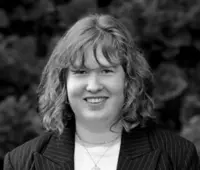
Who and What is Conscious? A Method for Developing and Validating Tests for Consciousness
Liad Mudrik 🗓️(439.0 B)
- One of the greatest challenges for the science of consciousness is to provide the tools to determine which organisms and systems are conscious. Developing such tools is crucial not only for scientific reasons, but also for societal and practical ones. However, this is not an easy feat; iIn this talk, I will examine two possible ways to validate such tests: relying on neuroscientific theories of consciousness and employing the iterative natural kind approach. I will examine the advantages and disadvantages of both in attempting to make progress towards developing good-enough tests for consciousness in non-trivial populations.
11:15 – 12:15 CET 🌍
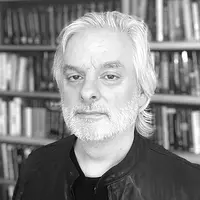
Just Aware Enough: Evaluating Awareness Across Artificial and Biological Systems
Nadine Meertens 🗓️(443.0 B)
- The range of candidate systems being evaluated for consciousness and cognition has expanded dramatically, from animals and infants to AI systems, plants, and beyond. Yet, our conceptual tools and evaluation methods have struggled to keep pace. In this talk, I argue that awareness offers a more tractable alternative to consciousness for evaluating and comparing across such diverse systems. The proposal is to understand awareness as a system’s or organism’s abilities to selectively process, store, and use information in the service of goal-directed action. First, I will develop a pragmatic account of awareness, briefly distinguishing it from consciousness. I then outline an approach for evaluating awareness profiles across artificial systems with differing architectures, scales, and operational domains, guided by four desiderata: domain-sensitivity, deployability across scales, multidimensionality, and ability-level evaluation. Finally, I will illustrate its utility with a swarm robotics example.
13:30 – 14:30 CET 🌍
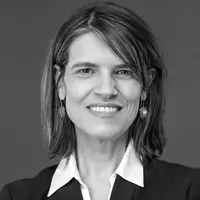
Tests for Consciousness in AI Systems
David Chalmers 🗓️(442.0 B)
- I'll first consider some limits on tests for consciousness in AI systems that derive from theories of consciousness. I'll then consider the possibility of tests for consciousness in AI systems that rely on detecting the presence of phenomenal concepts or their functional analogs.
14:45 – 15:45 CET 🌍
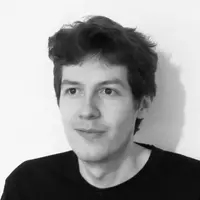
Tests for Consciousness in Infants
Claudia Passos Ferreira 🗓️(451.0 B)
- In this talk, I will focus on the marker method for detecting consciousness, applied to the infant case. After discussing the basic forms of the method, I examine three prominent tests—the network test, the global violation (oddball) paradigm, and the attentional blink—assessing their strengths and limitations as indicators of early consciousness. I discuss how to weigh the evidence associated with multiple markers. I argue that these markers provide especially strong evidence when they display synchronic convergence (appearing at the same time) and interlevel consistency (with behavioral and neural markers being mutually consistent). I conclude with implications for prenatal consciousness and reflection on persistent expert disagreement, underscoring the need for more principled criteria in evaluating markers.
Wednesday, 10 June

10:00 – 11:00 CET 🌍
Beyond C-Tests: Toward a Comparative Cartography of Structured Subjective Experience
Lucia Melloni 🗓️(448.0 B)
- How should we determine whether an infant, an octopus, an organoid, or an artificial system is conscious? Recent proposals increasingly answer this question through consciousness tests (C-tests): identify indicators associated with consciousness in adult humans and extend them to novel systems. But what makes such a test valid? And how do we know that its indicators track consciousness rather than cognition, learning, or information processing more generally?
I argue that these questions reveal two unresolved challenges. The first is a validation problem: outside consensus adult human cases, it remains unclear how proposed indicators can be independently calibrated or corrected. The second is a target-identification problem: even if indicators generalize reliably, it is uncertain whether they measure consciousness itself or capacities that merely accompany it.
These difficulties suggest that consciousness science may be asking the wrong question. Rather than treating consciousness as a classificatory problem and asking which systems qualify as conscious, I propose that we treat it as a cartographic one. The goal is not to identify universal admission criteria for consciousness, but to map the dimensions along which subjective experience becomes organized across biological, developmental, and artificial systems. On this view, adult human consciousness is not the ruler against which all minds are measured, but one well-characterized region within a broader space of possible experiential organizations.
The challenge for consciousness science is therefore not merely to determine which systems are conscious, but to understand the forms and trajectories through which subjective experience is structured.
11:15 – 12:15 CET 🌍
A Critical Analysis of the Natural Kind Strategy in Consciousness Science
Leonard Dung 🗓️(440.0 B)
- According to the influential natural kind strategy (NKS), we should study consciousness as a natural kind. Roughly, this means treating consciousness as corresponding to real causal structure that is posited to explain why many different consciousness-related features cluster in nature. NKS is promised to provide a fruitful methodology for consciousness science that researchers with very different scientific and philosophical allegiances can agree on. However, I argue that these different goals are not compatible. To provide substantive methodological guidance, NKS needs to adopt and defend highly controversial scientific and philosophical assumptions. On the flipside, to achieve the desired philosophical and scientific neutrality, NKS would need to renounce most of its methodological ambitions. This result sharply delimits what NKS can be hoped to accomplish. I draw out the further implication that there are at least three different versions of NKS with different promises and limitations. In response, I suggest that a fruitful path forward is to explicitly adopt and defend substantive assumptions that can support the most ambitious version of NKS.

13:30 – 14:30 CET 🌍
To Understand Consciousness, Study Insects
Jonathan Birch 🗓️(442.0 B)
- If you were to draw up a wish list of things you’d hope to see in a model organism for studying consciousness, a sensible list might include: selective attention, attentional blink, binocular rivalry, putative pain responses, epileptoid seizures, anaesthesia, metacognition, active sleep, sophisticated forms of learning. Insects are already studied as highly tractable models of all of these things. I argue that our best chance of understanding consciousness within the next 50 years runs via studying insects.
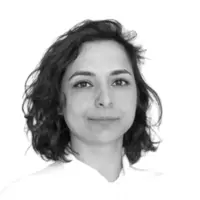
16:30 – 17:30 CET 🌍
Turing, Searle, Lovelace: Three Levels of Mental Attribution in AI
Aïda Elamrani 🗓️(442.0 B)
- Phenomenal experience remains a scientific challenge even in the human case, so testing for it in digital computers is necessarily speculative. Nevertheless, as AI systems elicit anthropomorphic responses and become increasingly integrated into the flows of everyday life, the problem of attributing mental states to them becomes increasingly urgent. We briefly retrace the history of the problem of mental attribution in humans, then outline a three-level strategy for addressing it in machines: Turing at the level of behaviour, Searle at the level of architecture, and Lovelace at the level of explainability. Deep learning and large language models have profoundly changed the landscape of these debates. Humans and AI systems now share a common linguistic interface, reshaping the distinction between substrate and abstraction. We review what recent advances in AI research reveal about LLMs at each of these three levels, arguing that they force a re-evaluation of our explanatory frameworks. Depending on one’s metaphysical and epistemological priors, one may arrive at very different conclusions regarding the underlying question of whether AI systems instantiate or merely simulate mental states. Factually, AI systems now exhibit surprising behaviours that reliably map onto learned processes. Their computations increasingly drift away from their designed structure, forming stable abstract patterns, which in turn co-shape the world we share. With respect to the attribution of mental states, features, or properties, these developments do not suggest that we are approaching full indistinguishability, but rather that we are discovering increasingly stable correspondences between human and digital minds (which Chalmers denotes by the prefix “quasi-”).
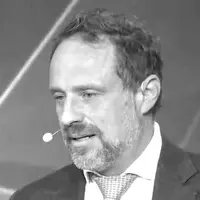
18:00 – 19:00 CET 🌍
Peeling the Onion: Deep Layers of Consciousness Detection
Marcello Massimini 🗓️(446.0 B)
- Conscious experience is inherently private: for anyone other than oneself, attributing consciousness is always an inference. In everyday life we make this inference effortlessly—people speak, act purposefully, and can tell us how they feel. But in the case of patients with severe brain injuries, the inference becomes precarious. These patients may retain consciousness, but lack fundamental abilities, such as motor functions, executive control, language or the capacity to receive and process information from the external world. Such profound disconnection and impairment of self-expression often leaves caregivers, and families with the burdensome task of inferring consciousness—or its absence—while making high-stakes treatment decisions. This ethical and practical pressure has forced clinicians and researchers to dig deeper and deeper, beyond behavior, beyond language and other cognitive functions, beyond the usual signs, toward the core physical substrates of consciousness.
Here, the metaphor “peeling the onion” is used to indicate this process of working inward through successive layers of evidence to get closer to the “core” of the problem, especially when the outer, obvious signs are missing or unreliable. While the metaphor may not sound very elegant, it captures both the method — progressively deeper tests — and the humility of the enterprise: each layer can mislead, and getting to the core takes careful inference. In my talk, I will highlight the clinical need to dig deeper, and identify four layers of consciousness detection. Then, I will provide real-life examples that highlight the challenges and the opportunities inherent to inferring consciousness at the deeper levels of investigation. Finally, I will briefly analyze outstanding points of contact between the practical need to peel the onion to its core and the scientific effort to distill the neural correlates of consciousness.
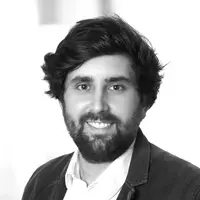
19:15 – 20:15 CET 🌍
Towards Direct Tests for Consciousness in Non-Human Animals, Infants, and AI
Johannes Kleiner 🗓️(444.0 B)
- The key limitation of contemporary tests for consciousness (C-tests) in non-human animals, infants, and AI is that they are indirect tests: they test for the presence of functions, behaviours, capacities, or states whose relation to or correlation with consciousness has to be known for implications about consciousness to follow, but which is not itself part of the test. Credence in the subsumed relation or correlation is established based on arguments, prior experiments, or theories of consciousness, with corresponding implications for the certainty and construct validity of these tests. Here, we present a method to construct direct tests for consciousness that do not depend on a known relation or correlation between consciousness and a measured property. Rather, the tests rely on the measurement of covariates of the test. Knowledge of correlations between the covariates and consciousness is not required. The method may be applicable to improve known C-tests. As a theoretical example, we discuss the case of infant consciousness. Our result rests on mathematical facts similar to those that have enabled the field of evaluation research in psychology.
Cancelled or Postponed Talks
We regret to have to inform you that the following talks have been canceled due to personal reasons. We apologize for any inconvenience this may cause and look forward to welcoming the speakers on a future occasion.
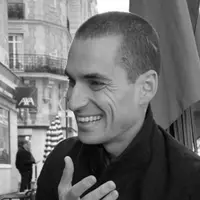
We regret to have to inform you that this talk had to be canceled due to personal reasons.
The Inherent Fuzziness of Consciousness: Here, There, and Not Everywhere
Borjan Milinkovic 🗓️(445.0 B)
- Discerning whether an organism or synthetic system could house, or be the engine of, consciousness remains a challenging question. Decades of research have proposed a large number of criteria, usually in the form of indices, that work well in specialised scenarios but might be limited by a lack of generalisation. One class of criteria that is underrepresented however are those derived from neurobiological and biophysical primitive properties of brain function. Here, I extend on these criteria and how they might be implicated in understanding the (im)possibility of consciousness in systems beyond biology. In light of this and agnostic to consciousness, I touch on realistic next steps for developing human-aligned synthetic systems and the ethical imperative to do so. Lastly, I conjecture on the inherent fuzziness of attributing consciousness and propose a potential path to operationalise the organisational relations between C-tests built atop this fuzziness from first principles. As a result, a formal theory of consciousness in physical systems requires us to not chase a single unifying theory but rather a microcosm of interrelated formal models that allow for partial instantiations whereby human consciousness appears as a special case.
Organizing Institutions
IPEM, Ghent University
Bamberg Mathematical Consciousness Science Initiative (BAMΞ)
Contact
In case of questions, please reach out.
Updates
Updates about this workshop and similar activities are available via:
- Our mailing list, register here.
- Our Google calendar, available here.