
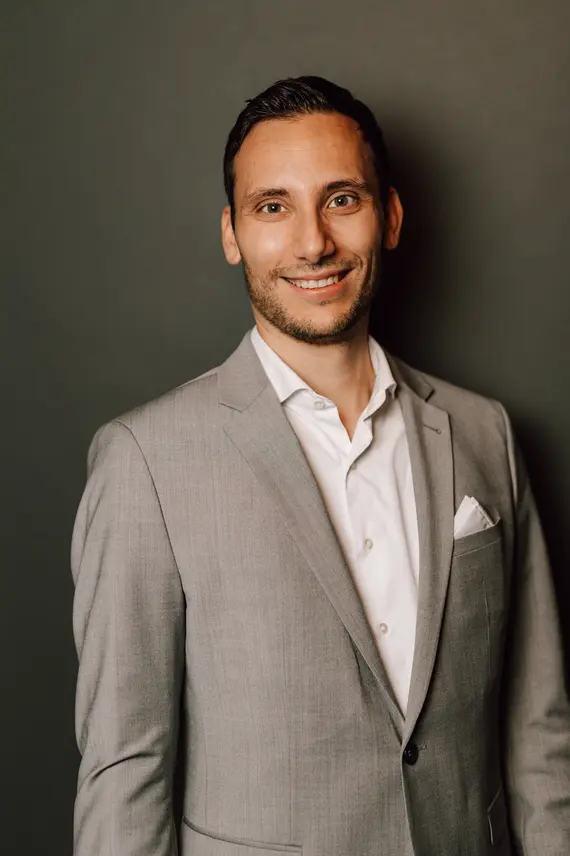
Curriculum Vitae
Maximilian Wittmann is an external PhD student and investigates how we can prepare people emotionally, socially and cognitively for collaboration with intelligent robots. His research is at the intersection of human-robotinteraction, game design and gamification, psychology, and software engineering (especially artificial intelligence (AI)). Based on empirical studies, he proposes new pathways for the responsible adoption of robots and reducing existing barriers. Mr Wittmann investigates how technology acceptance of AI-based robots can be increased, while paying attention to the risk of overtrust in the system's predictions and recommendations.
Mr Wittmann works full-time as COO Head-of-Delivery and Regulatory Project Manager at ipp Dr. Klügl. Prior to this, he worked as a product and solution security expert for secure manufacturing in factory automation at Siemens AG, as a senior consultant in the field of design control in medical technology at ipp. Dr. Klügl, and as a software developer at a medium-sized ERP software service provider in Nuremberg. From 2019 - 2024, Mr Wittmann was self-employed on a part-time basis. As part of this activity, he published books as well as online courses and coaching on the subject of Industry 4.0 and digital minimalism.
Mr Wittmann holds an M. Sc. in Mechanical Engineering and a B. Sc. in International Production Engineering and Management from the Friedrich-Alexander University Erlangen-Nuremberg. During his studies, he spent semesters abroad in Shanghai (Fudan University) and Singapore (Curtin Singapore) and completed an internship abroad at Robert Bosch GmbH in Spain. Mr Wittmann has also completed internships in industry (e.g. at ZF Friedrichshafen AG) and worked as a research assistant at several FAU institutes. In 2020, Mr Wittmann also worked as a research assistant at the Technical University of Denmark. He investigated how digital immersive technologies (e.g. VR, AR, wearables, digital twins) can be used for the therapy of stroke patients in cooperation with exoskeleton robots. He also shed light on the role these technologies play in the long-term behavioural change of patients.