Towards a Measurement Theory for Consciousness Science
Measurement is an integral part of consciousness science. Correspondingly, a host of measurement techniques have been developed and refined over the past decades. These techniques include measures of consciousness to infer whether an experiencer has consciously perceived a stimulus, as well as C-tests, which allow to infer whether an experiencer is capable of having conscious experiences.
What is currently lacking in the field, however, is a substantive theory that ties the different approaches together, and allows to compare, contrast, or differentiate between them. Such theories, called measurement theories, play an integral role in fields like psychology, economics, or physics.
The goal of this workshop is to invite reflection about measurement theories in consciousness science. It aims to prompt discussion of:
- Goals and Desiderata of a Measurement Theory in Consciousness Science: What are the specific problems or challenges in consciousness science that a measurement theory could/would solve? What would the theory have to achieve in order to be useful?
- Feasibility of a Measurement Theory in Consciousness Science: Is consciousness science at a stage where a measurement theory is possible? What are unique features of measurement in consciousness science that a measurement theory should accommodate?
- State of the Art and Existing Work: Is there existing work that might pave the way for a measurement theory for consciousness? What is the state of the art of the theoretical understanding of measurement in the field?
- Comparison with Other Fields: What is required for a good measurement theory in psychology or (cognitive) neuroscience, and which measurement theories exist in these fields? Can these be applied to or helpful for measurement in consciousness science?
To facilitate these discussions, the workshop brings together a group of leading experts that work on, or have extensively thought about, questions of measurement in consciousness and cognition.
If you would like to participate in this workshop via Zoom, please apply as instructed below.
Date & Time
Date: February 23 – 24, 2026
Time: Programme TBA
Location: BAMΞ, University of Bamberg & Online, Zoom
This workshop is part of BAMΞ's Measurement Theory Sprint.
Invited Speakers
We are currently in the process of inviting speakers. Please find below a list of confirmed invited speakers.

Megan Peters
Prof. Dr.
Experimental Psychology Department, University College London
On the Proximity of Minds and Machines in Developing Tests for Artificial Consciousness

Johannes Fahrenfort
Prof. Dr.
Cognitive Psychology Section, Free University Amsterdam
Subjective and Objective Approaches in the Study of Conscious Perception

Jolien Francken
Prof. Dr.
Swammerdam Institute for Life Sciences, University of Amsterdam
From Fragmentation to Integration in Consciousness Science

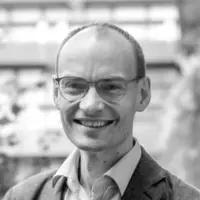
Riet van Bork
Prof. Dr.
Psychological Methods Department, University of Amsterdam
Measurement Theories in Psychology: Mental Attributes as True Scores, Latent Variables or Networks
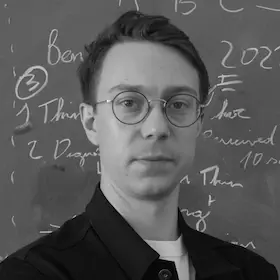
Matthias Michel
Prof. Dr.
Department of Linguistics and Philosophy, Massachusetts Institute of Technology (MIT)
PAS: Boo! Confidence: Hooray!

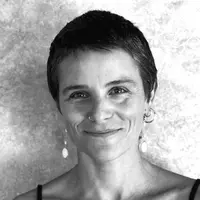
Camila Valenzuela-Moguillansky
Dr.
A MATHA, Escola de Fenomenologia Corporal
A Measurement Theory for Consciousness: Some Reflections from Experience Research

Andrew Y. Lee
Prof. Dr.
Department of Philosophy, University of Toronto
Consciousness & Continuity

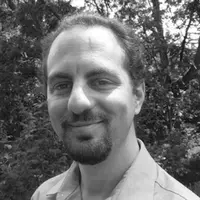
Wanja Wiese
Dr.
Institute for Philosophy II, Ruhr University Bochum
Can We Measure Consciousness in Artificial Systems?

Jorge Morales
Prof. Dr.
Department of Psychology & College of Social Sciences and Humanities, Northeastern University
What We Talk About When We Talk About Mental Images

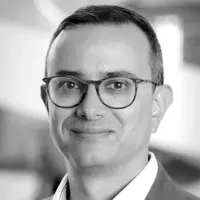
Noam Miller
Prof. Dr.
Collective Cognition Lab, Faculty of Science, Wilfrid Laurier University
Social Tests of Consciousness in Animals

Anat Arzi
Prof. Dr.
Department of Medical Neurobiology & Department of Cognitive and Brain Sciences, Hebrew University of Jerusalem
The Dynamics of (Un)Consciousness: Insights from Olfaction and Respiration

Johannes Kleiner
Dr. Dr.
Bamberg Mathematical Consciousness Science Initiative & Institute for Psychology, University of Bamberg
Representational Measurement Theory and the Measurement of Consciousness
Discussion Sessions
Exchange between participants of the workshop, regarding thoughts, ideas, and experience, is an integral part of this workshop. To facilitate this exchange, there is ample space for discussions after each talk, as well as dedicated discussion sessions, one at the end of each day of the workshop. For details, please see the schedule below.
Application
If you would like to participate in this workshop, please apply via the form linked below. Please note that in order to facilitate productive discussions, spaces are limited. We are looking forward to welcoming you!
Schedule
We are happy to share the workshop's schedule below. Please note that there may still be minor changes to the schedule in advance of the workshop.
Instructions:
- Zoom access details have been sent to all workshop participants via email.
- Please click on the globe symbol 🌍 to convert a time into your own time zone.
- Use the calendar symbol 🗓️ or our Google calendar to add a talk to your personal calendar.
Monday, 23 February

9:00 – 10:00 CET 🌍
From Fragmentation to Integration in Consciousness Science
Jolien Francken 🗓️(1.8 KB)
- The field of Psychology is fragmented into a vast number of constructs and measures. Recent work suggests that tens of thousands of distinct constructs and measures have been used, yet most of them (79%) are not reused more than twice. This situation hampers cumulative knowledge building and, ultimately, scientific progress. Consciousness science in particular is characterized by pronounced conceptual and methodological inconsistency and fragmentation. In this talk, I will demonstrate how this fragmentation manifests in consciousness research and discuss different perspectives on whether, and in what sense, this is problematic. The central question that emerges is how we can integrate empirical studies that aim to investigate the same phenomenon but use different measurement methods. I will argue that a stronger focus on measurement practices can reveal concrete opportunities for integration and advance the field.
10:15 – 11:15 CET 🌍
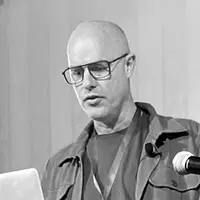
Subjective and Objective Approaches in the Study of Conscious Perception
Johannes Fahrenfort 🗓️(2.1 KB)
- This talk addresses the measurement problem in consciousness research. Science requires objective measurements to be able to falsify predictions, whereas consciousness is thought to be intrinsically personal and subjective. Consequently, behavioral measures of consciousness are often designated as “objective” or “subjective”. Surprisingly however, the exact meaning of these terms is typically not clearly defined. Moreover, applying the label objective or subjective to behavioral measures is misleading, as the same data can be analyzed within a “subjective” or “objective” framework. Thus, the objective-subjective distinction is not only relevant to the measure that is used, but to several other dimensions as well. In this talk, I will use empirical data from a number of experiments that identify different problems in consciousness research related to these dimensions: the adoption of a ground truth when computing outcome measures (performance vs appearance), non-perceptual shifts in higher order response types (Type 1 vs Type 2 responses), and the confounding influence of detection tasks on appearance/reproduction as a metric of subjective experience.
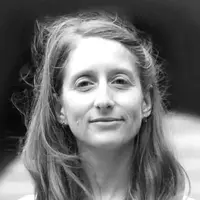
12:30 – 13:30 CET 🌍
The Dynamics of (Un)Consciousness: Insights from Olfaction and Respiration
Anat Arzi 🗓️(2.1 KB)
- Millions of people experience loss of consciousness after brain injury each year worldwide. The loss of consciousness could last seconds to years and, in some cases, for the rest of the person’s life. It is critical to know whether a brain-injured patient is conscious, minimally conscious, or unconscious to provide an accurate diagnosis and prognosis that guide rehabilitation and end-of-life decisions. Yet, despite this importance, standard behavioral methods for consciousness detection often fail, either because of sensory and motor deficits or due to the heterogeneous etiology and pathophysiology. There is therefore a pressing need for personalized diagnostic and prognostic tools that enable single-patient level assessment. Olfaction, which has a unique interaction with consciousness, offers a promising avenue for detecting covert consciousness. Building on this insight, we have developed innovative approaches that combine olfactory stimulation with physiological measures to probe residual awareness in patients with disorders of consciousness and reveal preserved processing that is not accessible through overt behavior, opening the door to more sensitive assessments and, ultimately, improved clinical care.
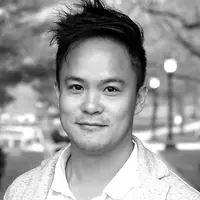
13:30 – 14:30 CET 🌍
Consciousness & Continuity
Andrew Y. Lee 🗓️(1.4 KB)
- Let a smooth experience be an experience with perfectly gradual changes in phenomenal character. Consider, as examples, your visual experience of a blue sky or your auditory experience of a rising pitch. Question: Do the phenomenal characters of smooth experiences have continuous or discrete structures? Some philosophers have argued that introspection favors the view that smooth experiences are continuous. I'll argue, instead, that introspection leaves open whether smooth experiences are continuous or discrete. Along the way, I'll clarify what it means to ascribe continuity or discreteness to experiences.
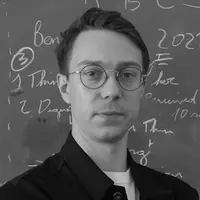
17:30 – 18:30 CET 🌍
PAS: Boo! Confidence: Hooray!
Matthias Michel 🗓️(1.7 KB)
- The two main ways of gathering subjective reports in consciousness research are the Perceptual Awareness Scale (PAS) and confidence ratings. The PAS is more popular because it is somewhat obvious: if you want to know if someone had a conscious experience of something, just ask them how clearly they saw it. This talk discusses the complications that arise from the use of the PAS, most notably: the fact that the PAS is contaminated by conscious perception of task-irrelevant features; and the fact that using the PAS might lead to a confusion between measuring the contents of consciousness and measuring consciousness of those contents. Examples from the literature on the neural correlates of consciousness will be used to show how the use of the PAS has distorted the field. By contrast, confidence-based measurement procedures are valid and probably more accurate than the PAS.

19:00 – 20:00 CET 🌍
On the Proximity of Minds and Machines in Developing Tests for Artificial Consciousness
Megan Peters 🗓️(3.0 KB)
- Debates about artificial consciousness are often framed in terms of verdicts: whether a given system is or is not conscious, and which criteria or theories can deliver such judgments. This talk will argue that this framing obscures a more fundamental epistemic challenge. Consciousness science has largely been developed within a narrow population – humans – under background assumptions that support evidential generalization within that domain but do not automatically extend to nonhuman animals or artificial systems. When our line of research expands to assess new populations that differ radically in embodiment, internal organization, and learning dynamics, the central problem should be not only detection but also discovery: whether there even exists a projectible cluster of properties that can support explanation and generalization across heterogeneous systems. Building on the iterative natural-kind (INK) strategy proposed by Bayne and Shea (2020) (see also (Bayne et al., 2024a, 2024b)), I lay out a roadmap for a proximity-guided extension of this approach. The INK strategy treats consciousness as a candidate natural kind whose structure is to be discovered through iterative revision of indicators, mappings, and theoretical commitments. However, in its abstract form, INK leaves open how evidential updates should be constrained under population shift. I argue that "proximity" relations – to be understood as multidimensional similarities and differences between systems (Peters, forthcoming) – provide the missing structure. By conditioning updates on explicit judgments about proximity within a Bayesian latent variable discovery model, a proximity-guided INK strategy renders several potential limitations of the INK strategy as visible, interrogable features rather than hidden liabilities. The result is a methodological roadmap for investigating consciousness under uncertainty, focused not on delivering verdicts but on clarifying what kinds of discovery about the natural kind of “consciousness” may be possible.

Tuesday, 24 February
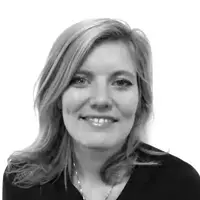
9:00 – 10:00 CET 🌍
Measurement Theories in Psychology: Mental Attributes as True Scores, Latent Variables or Networks
Riet van Bork 🗓️(2.1 KB)
- In psychology, measurement of mental attributes relies on statistical models: so-called ‘measurement models’. These measurement models are developed within specific psychometric frameworks, and different frameworks imply different ways of conceptualizing the measurement target. For example, in classical test theory, the measurement target is the ‘true score’: the expected value on a test, over hypothetical repeated administrations of this test. In latent variable theory, the measurement target is conceptualized as a common cause of observed behaviors. More recently, ‘network theories’ of psychological constructs have gained traction in psychology, in which behaviors, cognitions and feelings interact directly with each other, forming a complex system that can be represented as a network. Although the development of psychological network theory has led to many new analytic techniques, it has not yielded a psychometric framework to guide measurement. In this talk, I will discuss how the measurement target is conceptualized in classical test theory and latent variable theory, and explore what the target of measurement could be in a psychological network framework.
10:15 – 11:15 CET 🌍
Can We Measure Consciousness in Artificial Systems?
Wanja Wiese 🗓️(1.1 KB)
- A measure of consciousness should ideally be universal: it should not just be applicable to human beings, but also to other animals and artificial systems. This talk discusses some of the challenges that arise when we try to infer the presence of consciousness in artificial systems.
12:30 – 13:30 CET 🌍
Social Tests of Consciousness in Animals
Noam Miller 🗓️(2.4 KB)
- Identifying which non-human animals might be capable of consciousness is difficult because, unlike for other types of cognition, we lack a consensus theory of the function(s) of consciousness. In the absence of functional theories, we are limited to tests that rely on analogies to human consciousness, which can only be expected to work in species closely related to us. Starting with a theory of the function of consciousness, however, defines in a principled way which behaviors might serve as good markers of consciousness. Andrews & Miller (2025) recently proposed the social origins of consciousness theory. The theory suggests that consciousness first evolved during the Cambrian Explosion, with the emergence of cognition and a resulting rapid increase in the complexity and unpredictability of behavior. Greater flexibility made others’ choices harder to predict and risked the dissolution of groups. The function of sentience, on this theory, was to preserve social behaviors by focusing attention on group-mates and their movements. Animals that felt bad when away from their group and experienced positive emotions when successfully coordinating were able to retain the many adaptive benefits of sociality. This theory suggests that sentience is old and widely distributed among animals, and that – in all these species – social stimuli should be privileged in conscious processing. I present several paradigms for testing this idea, all of which could be applied broadly to a much wider range of species than are usually used in consciousness science.
13:30 – 14:30 CET 🌍
What We Talk About When We Talk About Mental Images
Jorge Morales 🗓️(3.2 KB)
- Understanding what someone else's experiences "look" like is perhaps one of the greatest challenges in consciousness science. Ultimately subjective and often hard to describe, if not ineffable, others' subjective experiences are notoriously inaccessible. But what if things were not as dire as previously thought? Can we approximate what someone else's experience looks like? In this talk, I will use mental imagery as a case study. I will present results from a series of vision science experiments showing that we can learn a lot about mental images and their subjective character.
The vividness of visual mental images is conventionally measured on a 1–5 scale. However, because mental imagery is inherently subjective, vividness alone provides limited information about the visual features of the underlying mental images. Can vividness ratings be linked to specific visual properties on an individual basis? Are people accurate at reporting visual properties from imagination? Is there a "shared" vividness concept across people?
To investigate these foundational questions, we developed a novel method that captures trial-by-trial links between vividness and visual properties: Subjects imagine real-life objects as vividly as possible, rate their vividness, and either reconstruct or classify their imagery's visual properties—sharpness, opacity, and saturation—when these were transferred onto an abstract shape on the screen. Across multiple experiments, we show that subjects associate specific visual-property combinations with particular vividness degrees, albeit exhibiting large individual differences. Importantly, when subjects were shown objects altered using their own or others' visual features, extracted from their imagery reconstructions, they could reliably approximate the vividness rating linked to that specific combination of visual properties.
Together, these findings demonstrate that, despite their subjective nature, mental images and their experienced vividness can be described accurately and objectively to an important extent. Crucially, this new paradigm captures both individual differences and converging interpretations in how visual properties map onto vividness. It appears that we do know what we talk about when we talk about conscious experiences, in general, and mental images, in particular.
17:30 – 18:30 CET 🌍
A Measurement Theory for Consciousness: Some Reflections from Experience Research
Camila Valenzuela-Moguillansky 🗓️(1.8 KB)
- In this presentation, I engage with the central question of the workshop—how to think about measurement in consciousness science—from the perspective of experience research. I share a set of reflections that lead me to propose a contemplative research framework—the Multidimensional Approach to Presence (MAP)—for the scientific study of lived experience. Drawing on studies of pain and bodily awareness conducted using the micro-phenomenological method, I examine three moments in the generation of experiential knowledge: contact with experience, the description of experience, and the analysis of experiential descriptions. From this reflection, I highlight three key features that should be taken into account when considering the possibilities and limitations of measurement in consciousness science: experience is dynamic, self-referential, and transformative.
19:00 – 20:00 CET 🌍
Representational Measurement Theory and the Measurement of Consciousness
Johannes Kleiner 🗓️(2.0 KB)
- Representational Measurement Theory, also known as Axiomatic or Abstract Measurement Theory, is one of the most comprehensive theories of measurement developed to date. The theory has, arguably, contributed to resolving fundamental problems of measurement in psychology and economics, and has achieved a thorough underpinning of the notions of numerical representation, scale type, and meaningfulness in measurement. The goal of this talk is to ask whether the theory can be of help in understanding the foundations of measurement in consciousness science. To this end, in the first half of the talk, I introduce and review the theory. Subsequently, I point to an obvious problem in its application to consciousness science, and explain how this problem can be overcome. I then sketch how the theory might relate to emerging paradigms for studying consciousness, including mathematical and computational phenomenology. I conclude with general remarks on the role of measurement theories in consciousness science in light of theories of consciousness and the contemporary state of the field.
Organizing Institutions
Bamberg Mathematical Consciousness Science Initiative (BAMΞ)
Contact
In case of questions, please reach out.
Updates
Updates about this workshop and similar activities are available via:
- Our mailing list, register here.
- Our Google calendar, available here.